7 Dubrovnik Old Town Secrets Most Tourists Walk Right Past
Dubrovnik has a way of making people look up. The towering city walls, elegant palaces, and centuries-old churches are hard to ignore.
But some of its most interesting stories are hiding in places you might never think to look.
A warning carved into a church wall in 1597. A tree growing out of stone. A medieval statue that once helped merchants measure fabric. And three mysterious faces watching over one of the city's busiest entrances.
These aren't attractions you need to travel miles to find. Most are right in the middle of Dubrovnik Old Town, passed by visitors every single day.
So before you rush from one famous landmark to the next, here are seven Dubrovnik secrets worth slowing down for.
1. Three Mysterious Faces Are Watching You Enter Dubrovnik
Thousands of visitors enter Dubrovnik through Pile Gate every day. Most admire the stone bridge, take a photo, and head straight toward Stradun.
But before crossing the bridge, look up.
Beneath the statue of St. Blaise, Dubrovnik's patron saint, you'll find three carved stone heads. One depicts a bearded man, while the other two represent women.
Their presence has inspired one of the Old Town's more unusual local legends.
According to the story, the sculptures are connected to forbidden relationships between Franciscan friars and Poor Clare nuns. The tale has been passed down over the years, although its historical accuracy remains unproven.
Even the Dubrovnik Tourist Board's account of the stone heads acknowledges that their real explanation could be far more ordinary.
And perhaps that's what makes them interesting.
Not every mysterious detail in Dubrovnik comes with a clear answer. Some have simply collected stories as generations of people passed underneath them.
Where to find it: Pile Gate, before entering the Old Town. Look beneath the statue of St. Blaise.

2. A Tiny Church That Survived the Earthquake It Was Built to Remember
Just inside Pile Gate, next to the Franciscan Monastery, stands a small Renaissance church that most visitors barely notice.
It's called the Church of St. Saviour, and its history contains a remarkable coincidence.
In 1520, Dubrovnik experienced a damaging earthquake. The city's Senate decided to build a church in gratitude for the city having been spared an even greater disaster.
Construction began that year, and the church was completed in 1528. Then, in 1667, Dubrovnik suffered one of the most devastating events in its history. The Great Earthquake destroyed much of the city and changed the appearance of the Old Town forever. Many medieval and Renaissance buildings disappeared, and large parts of Dubrovnik had to be rebuilt. Yet the little church built in gratitude for surviving an earlier earthquake remained standing.
According to the Dubrovnik Tourist Board, St. Saviour's Church survived the 1667 disaster intact and retains its original Renaissance appearance.
Think about that the next time you walk past it.
While much of the Dubrovnik you see today was shaped by rebuilding after 1667, this modest church offers a glimpse of what stood here before the disaster.
It doesn't compete with the city's grander landmarks for attention. It doesn't need to.
Its survival is the story.
Where to find it: Immediately inside Pile Gate, between the city walls and the Franciscan Monastery.

3. A Small Window Once Offered Abandoned Babies a Chance of Survival
Some Dubrovnik Old Town secrets are fascinating. Others reveal a much more serious side of the city's past.
Near the Franciscan Monastery, in Zlatarićeva Street, there's a historic doorway and a partially altered window connected to one of Dubrovnik's earliest institutions for abandoned children.
In 1432, the Republic of Ragusa established a public foundling hospital known as the Ospitale della Misericordia, or Hospital of Mercy.
Its purpose was to provide care for children who had been abandoned or whose families could not raise them.
But there was a problem. How could someone leave a baby at the institution without being identified?
The answer was a rotating wooden device called a ruota.
Built into a window, it allowed someone outside to place a child onto one side of the mechanism. After signaling the attendants, the device could be turned, bringing the child safely inside without either person seeing the other.
This system was designed to protect anonymity while allowing the institution to receive the child.
The original mechanism is no longer there, but traces of the former foundling hospital remain.
Visitors can still identify the Latin inscription above the doorway and the partially blocked window where one of the rotating devices once stood.
It's an extraordinary reminder that Dubrovnik's past wasn't only about wealthy merchants, powerful rulers, and impressive buildings.
It was also about ordinary people facing difficult circumstances and a city developing institutions to respond to them.
Where to find it: Zlatarićeva Street, near the Franciscan Monastery. Look for the historic doorway, Latin inscription, and altered window.
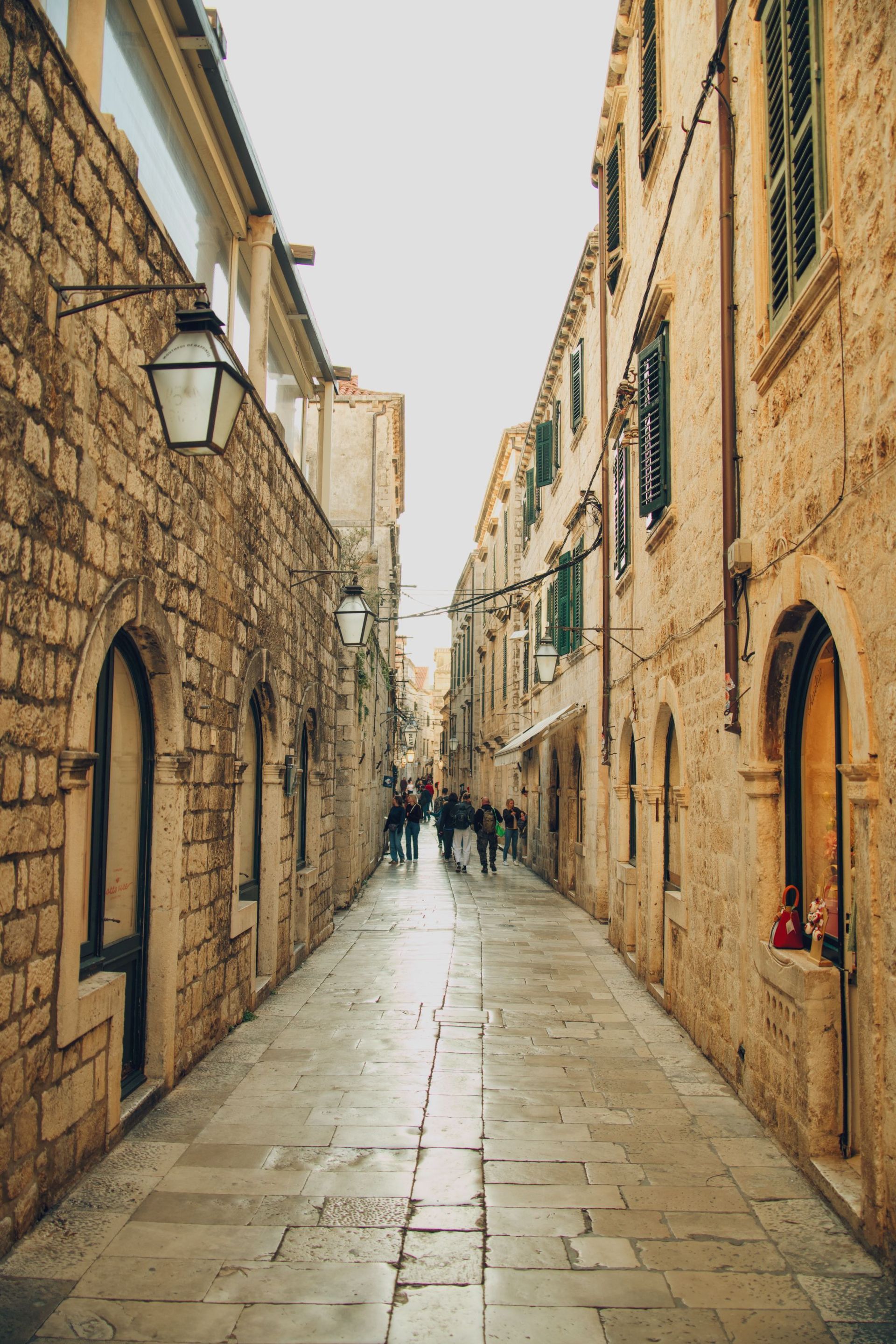
4. Someone Was So Annoyed by Children Playing Ball That They Carved a Warning into Stone
Imagine being so frustrated by noisy children that you decide to leave them a message.
Not a handwritten note.
Not a complaint to their parents.
A message carved into the wall of a church, where it remains more than four centuries later.
That's exactly the kind of story you'll discover at the Church of St. Roch.
On its eastern wall, along Od Domina Street, there's a Latin inscription dated 1597.
The message begins with a peaceful greeting before delivering a rather unexpected reminder: those playing ball should remember that they, too, are mortal.
It's hardly the encouragement you'd expect from someone watching children enjoy a game.
The inscription has often been interpreted as the work of someone irritated by the noise of ball games in the street. The author's identity, however, remains unknown.
The Dubrovnik Tourist Board describes the inscription as evidence of a centuries-old conflict between energetic children and residents seeking some peace.
And that's what makes this one of our favorite kinds of historical details.
You don't need to understand medieval politics or architecture to appreciate it.
You just need to recognize a very familiar situation: children having fun, someone nearby getting annoyed, and a disagreement about noise.
Apparently, some things haven't changed much since 1597.
Where to find it: The eastern exterior wall of the Church of St. Roch, on Od Domina Street.

The Latin Inscription About Honest Trade
A Latin inscription above the atrium passage addresses merchants: "Our weights do not permit cheating or being cheated. When I weigh goods, God weighs me". This wasn't decorative philosophy. It served as a public warning that dishonest measurements and fraudulent trade would not go unnoticed in a republic whose entire existence depended on commercial reputation and diplomatic trust.
5. A Cypress Tree Has Been Growing Out of a Church Wall for Nearly 200 Years
Dubrovnik is famous for its stone architecture.
Trees growing out of that architecture are another matter.
Walk along Od Puča Street and you'll eventually reach the Church of St. Joseph. Above its entrance, near the statue of the saint, something unusual interrupts the stone facade.
A living cypress tree.
It appears to grow straight out of the church wall, where it has been part of the streetscape for almost two centuries.
The church itself was built after the devastating earthquake of 1667, replacing an earlier church dedicated to St. James. It became associated with the city's carpenters, who dedicated the new church to their patron saint, St. Joseph.
But the tree has its own story.
According to an HRT report published in March 2026, nobody knows exactly how the cypress first took root there. One possibility is that a bird carried a seed into a suitable opening in the stone.
What is known is that the tree developed a root system capable of reaching water, allowing it to survive in a place where few people would expect a tree to grow. It even suffered damage during the shelling of Dubrovnik in December 1991 and recovered.
The tree isn't an ancient monument or a carefully planned piece of decoration. It's simply a remarkable example of nature finding room to grow in a city built almost entirely from stone.
Where to find it: The facade of the Church of St. Joseph on Od Puča Street. Look above the entrance.

6. Orlando's Arm Was Once an Official Measuring Tool
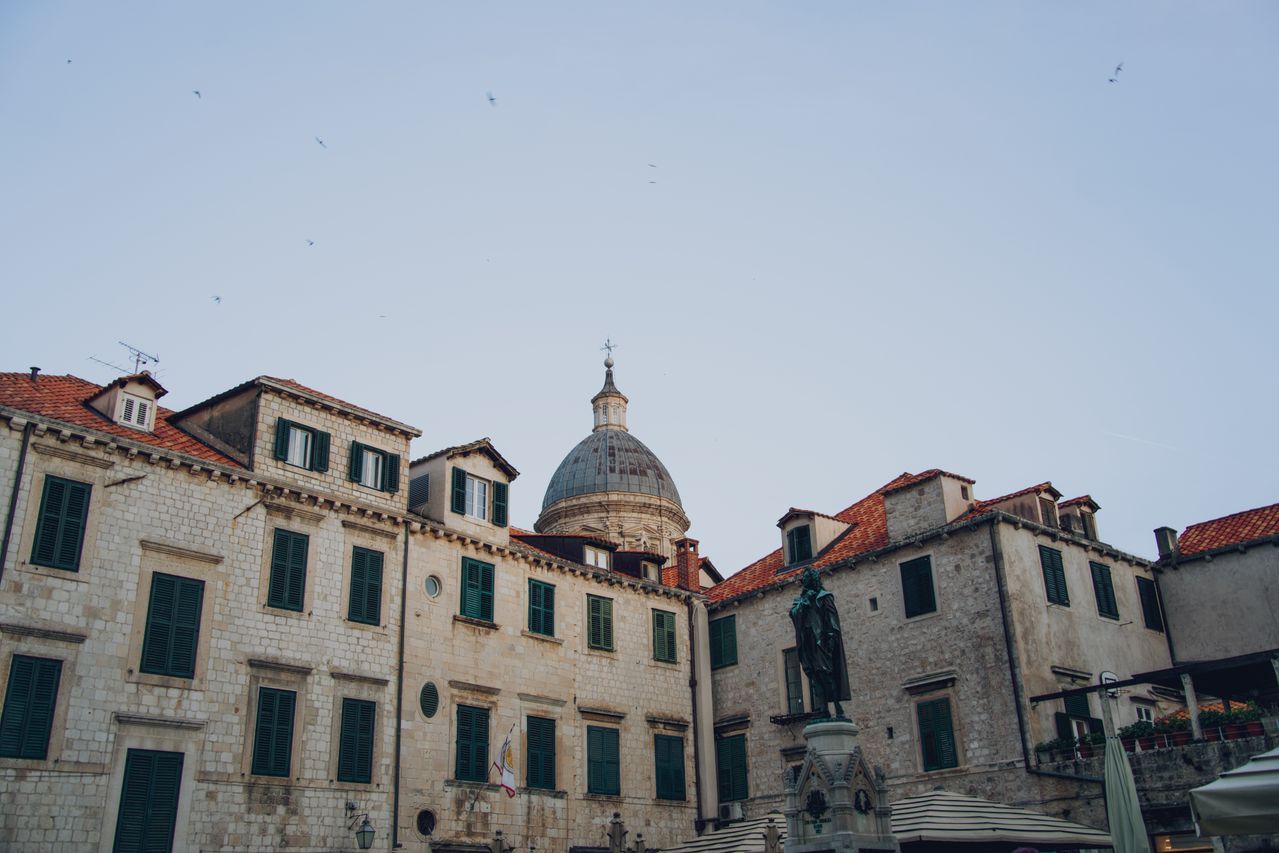
You've almost certainly seen Orlando's Column in photos of Dubrovnik. The medieval knight stands in Luža Square, close to the Church of St. Blaise, holding his sword and watching over one of the busiest parts of the Old Town. But here's something many visitors don't know. Orlando wasn't just a symbol of Dubrovnik's freedom and independence. His arm was also connected to an official unit of measurement.
During the Republic of Ragusa, merchants used a measure known as the Dubrovnik cubit, or lakat, when trading fabric. Its length was 51.2 centimeters, corresponding to the length of Orlando's right forearm, the one holding the sword. The standard was marked at the base of the column.
According to the City of Dubrovnik's official history of Orlando's Column, the monument had several practical roles beyond its symbolic importance.
Public announcements were made there, the Republic's flag flew above it, and the column was also associated with public punishment.
So while today's visitors gather around Orlando for photographs, this square once played an important role in Dubrovnik's commercial and political life.
There's something wonderfully practical about that detail. A monument representing the city's independence was also connected to the everyday business of measuring cloth.
The next time you photograph Orlando, pay attention to the arm holding his sword.
You're looking at more than a medieval knight. You're looking at a reminder of how closely trade and public life were connected in Dubrovnik.
Where to find it: Orlando's Column in Luža Square, near the Church of St. Blaise.
7. Two Green Men Have Been Keeping Time Above Dubrovnik for Centuries
At the eastern end of Stradun stands Dubrovnik's famous City Bell Tower. You probably notice the clock first.
But look higher, toward the bell, and you'll spot two unusual figures holding hammers.
Meet Maro and Baro.
Together, they're known as the Zelenci, meaning "the green ones." The figures are bronze bell strikers whose distinctive color developed through their long exposure to the elements.
Their job is to strike the bell and mark the hours. The City Bell Tower dates to the 15th century, and the bronze figures were created during the same broad historical period as the great bell, which was cast in 1506.
But there's an unexpected twist.
The figures you see on the tower today aren't the originals.
After centuries of use and exposure, the original Zelenci were removed for preservation. Copies took their place when the tower was rebuilt in 1929.
The originals are now displayed in the Rector's Palace, according to the Dubrovnik Tourist Board.
So next time you hear the bell ring in Luža Square, look up.
Those two little figures are part of a tradition that has helped mark the rhythm of life in Dubrovnik for generations.
And unlike many historical objects that disappear behind museum glass, their replacements still perform the job for which they were designed.
Where to find it: Near the top of the City Bell Tower in Luža Square. The original figures are displayed inside the Rector's Palace.

How to Find These Hidden Details in Dubrovnik Old Town
The best part about these Dubrovnik secrets is that you don't need a complicated itinerary to discover them.
Start at Pile Gate, where the three mysterious stone heads welcome visitors into the city. Just inside, you'll find St. Saviour's Church and, nearby, the traces of the former foundling hospital in Zlatarićeva Street.
From there, explore the smaller streets south of Stradun to find the Church of St. Roch and its unusual inscription.
Continue toward Od Puča Street, where the cypress tree at St. Joseph's Church is waiting to surprise anyone who remembers to look up.
Finally, make your way to Luža Square. Orlando's Column and the City Bell Tower are two of Dubrovnik's most familiar landmarks, but you'll see them differently once you know their stories.
You can discover the exterior details on foot without buying a museum ticket, although access to the originals of the Zelenci requires entering the Rector's Palace.
And there's no need to turn this into another sightseeing checklist.
Take your time, look carefully, and leave room to explore the smaller streets along the way.
For more unusual stories, you can also discover the legend behind Dubrovnik's Maskaron, learn about the history of Sponza Palace, or explore the mystery of Lokrum Island's curse.