What Makes Sponza Palace So Special? The Story Behind a Dubrovnik Landmark
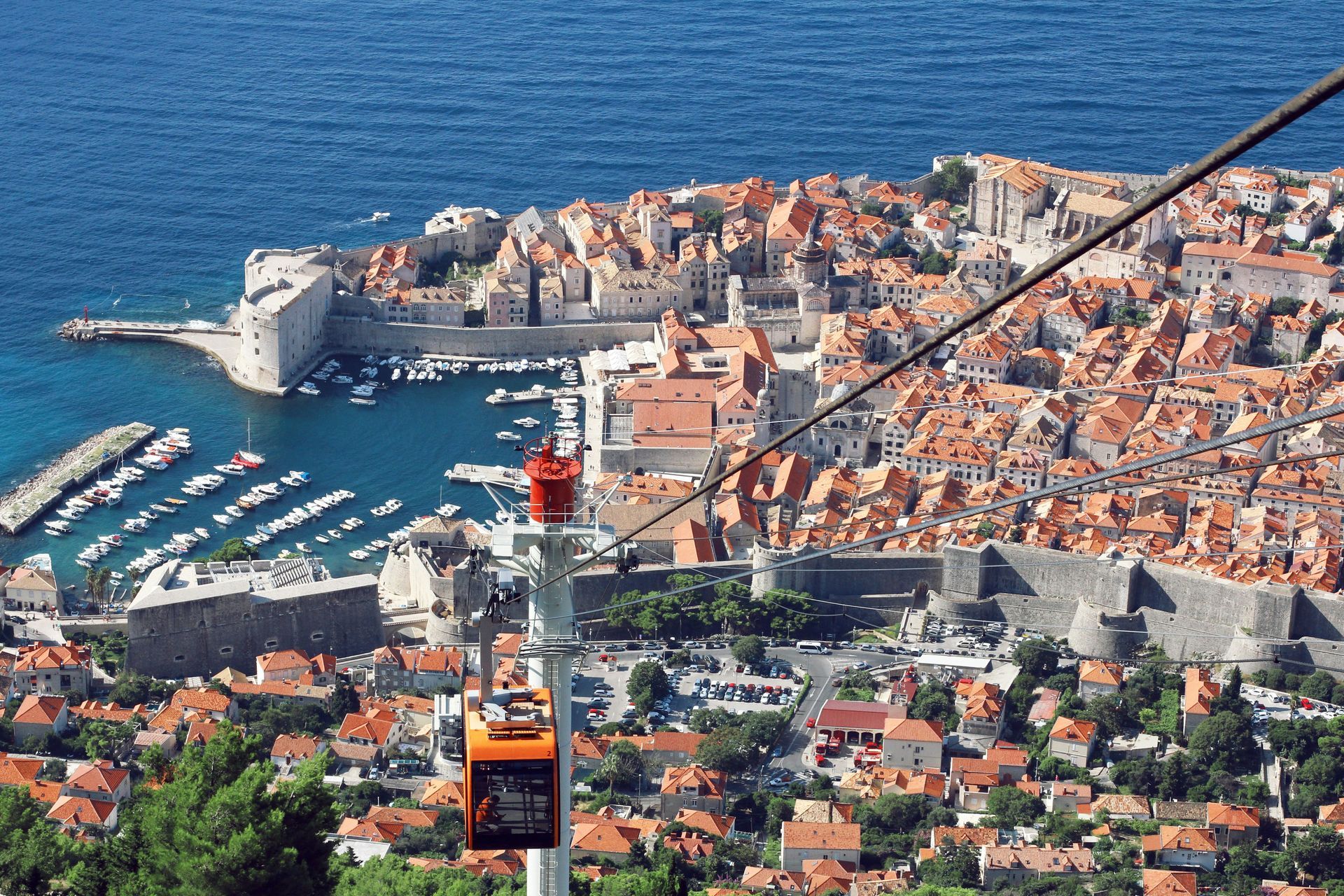
You've walked past Sponza Palace probably without realizing it's one of the few buildings that survived the 1667 earthquake in Dubrovnik. Most of the Old Town crumbled. This structure stood firm and preserved centuries of history inside its walls.
The construction of Sponza Palace Dubrovnik took place between 1516 and 1521. It wasn't just another government building. It operated as a customs house and treasury where merchants conducted business under a Latin inscription warning against dishonest trade. The Dubrovnik State Archives are housed there today and are thought to be among the richest in Europe.
This piece reveals what makes Sponza Palace special, from its survival story to the details you should notice when visiting.
What Is Sponza Palace?
Where Sponza Palace Stands in Dubrovnik Old Town
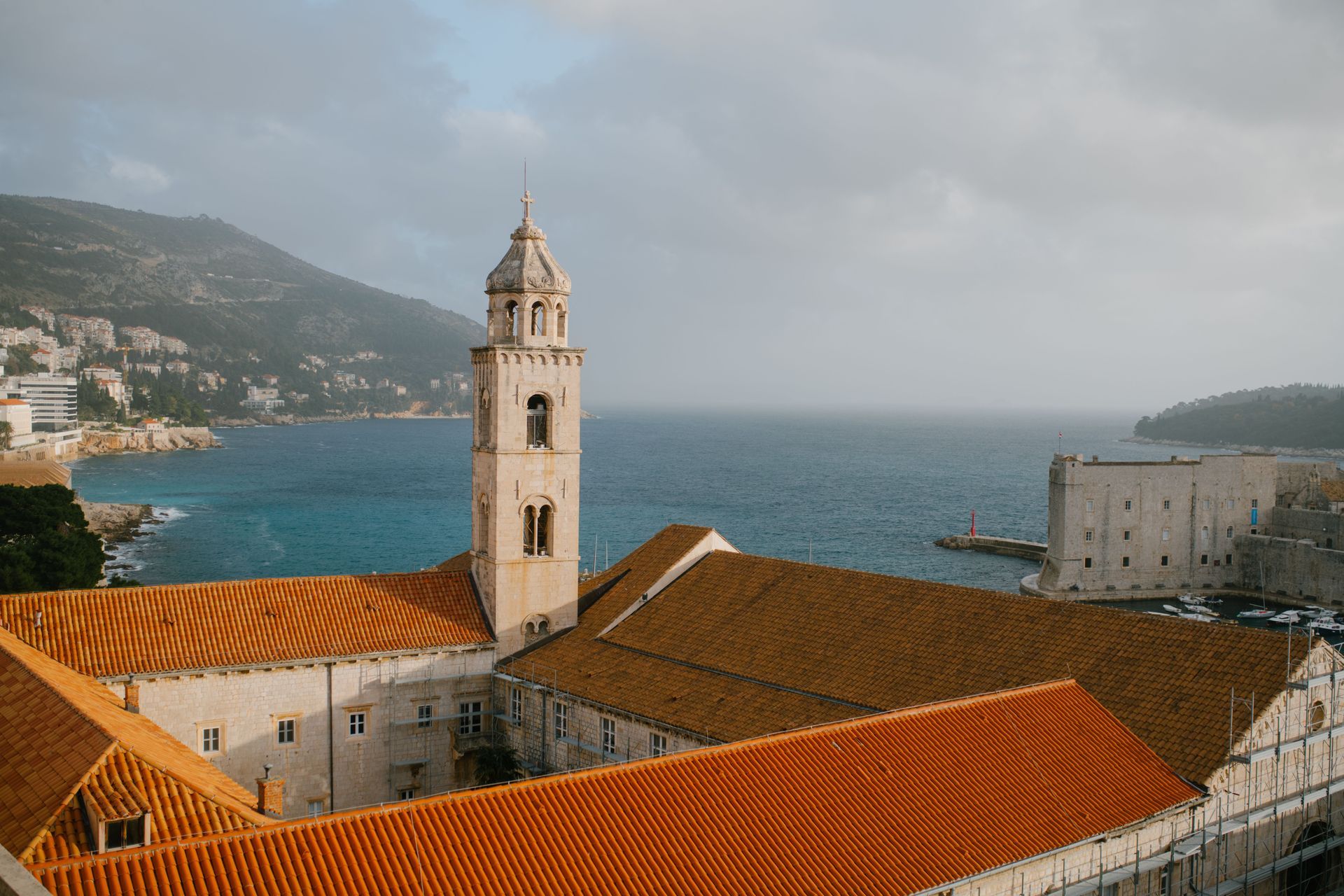
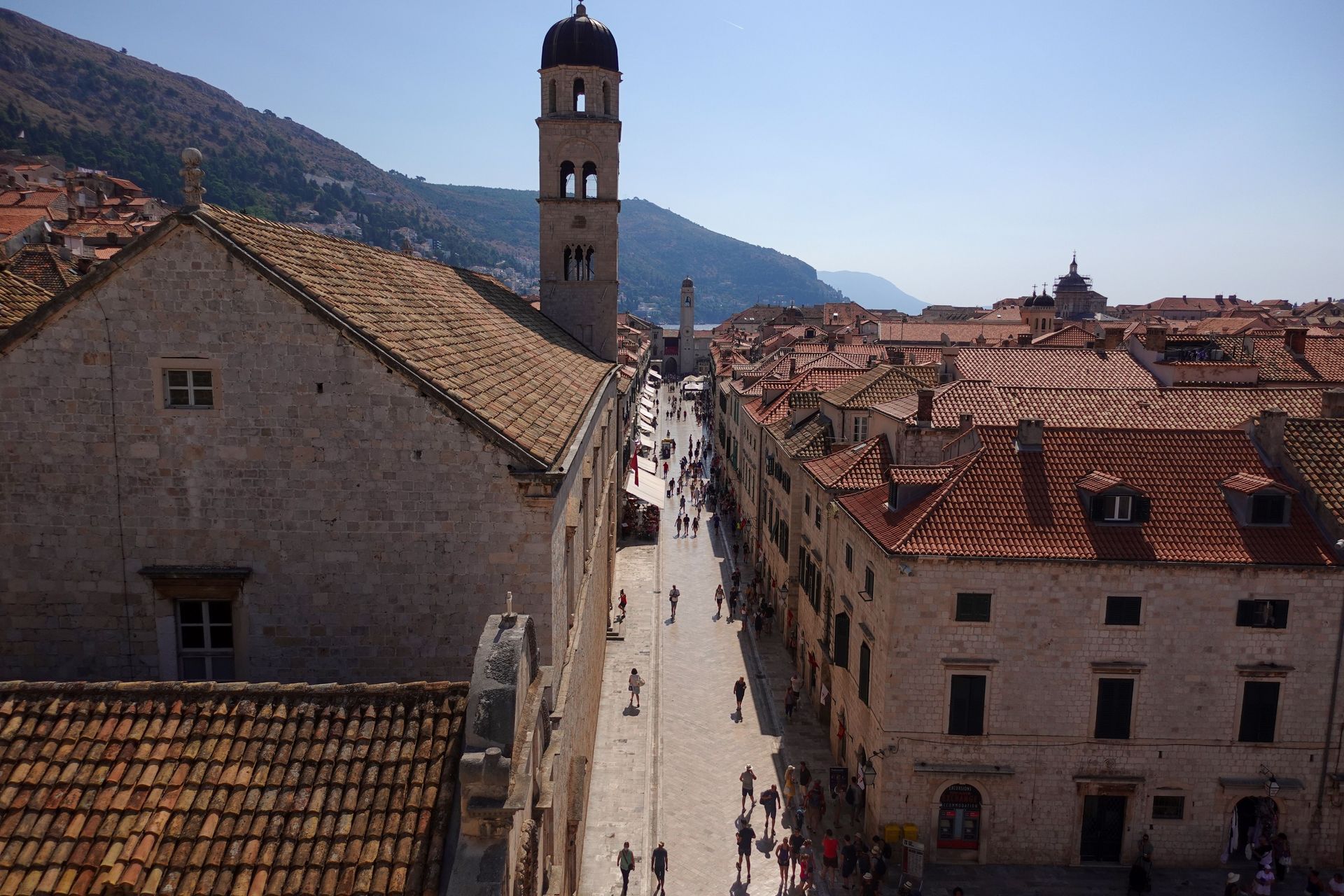
Sponza Palace occupies the eastern end of Stradun in Luža square, next to Dubrovnik's grand Bell Tower. The building faces Orlando's column and Saint Blaise Church. This location was the city's main commercial hub throughout history.
The palace's name comes from the Latin word "spongia," which refers to the spot where rainwater was collected. The palace was also known as Divona, a name associated with its role as Dubrovnik's customs house. Both names reflect the building's practical importance to the Republic rather than an aristocratic residence.
When Sponza Palace Was Built
Construction began in 1516 and finished in 1522. Dubrovnik master builder Paskoje Miličević Mihov designed it. The brothers Andrijić, master stonecutters from Korčula, crafted the loggia and sculptures. The rectangular building with an inner courtyard took six years to complete.
French Renaissance sculptor Bertrandus Gallicus created a relief medallion depicting the Christ monogram flanked by two angels. This remains one of Dubrovnik's finest examples of French Renaissance sculpture.
The Architecture That Makes Sponza Unique
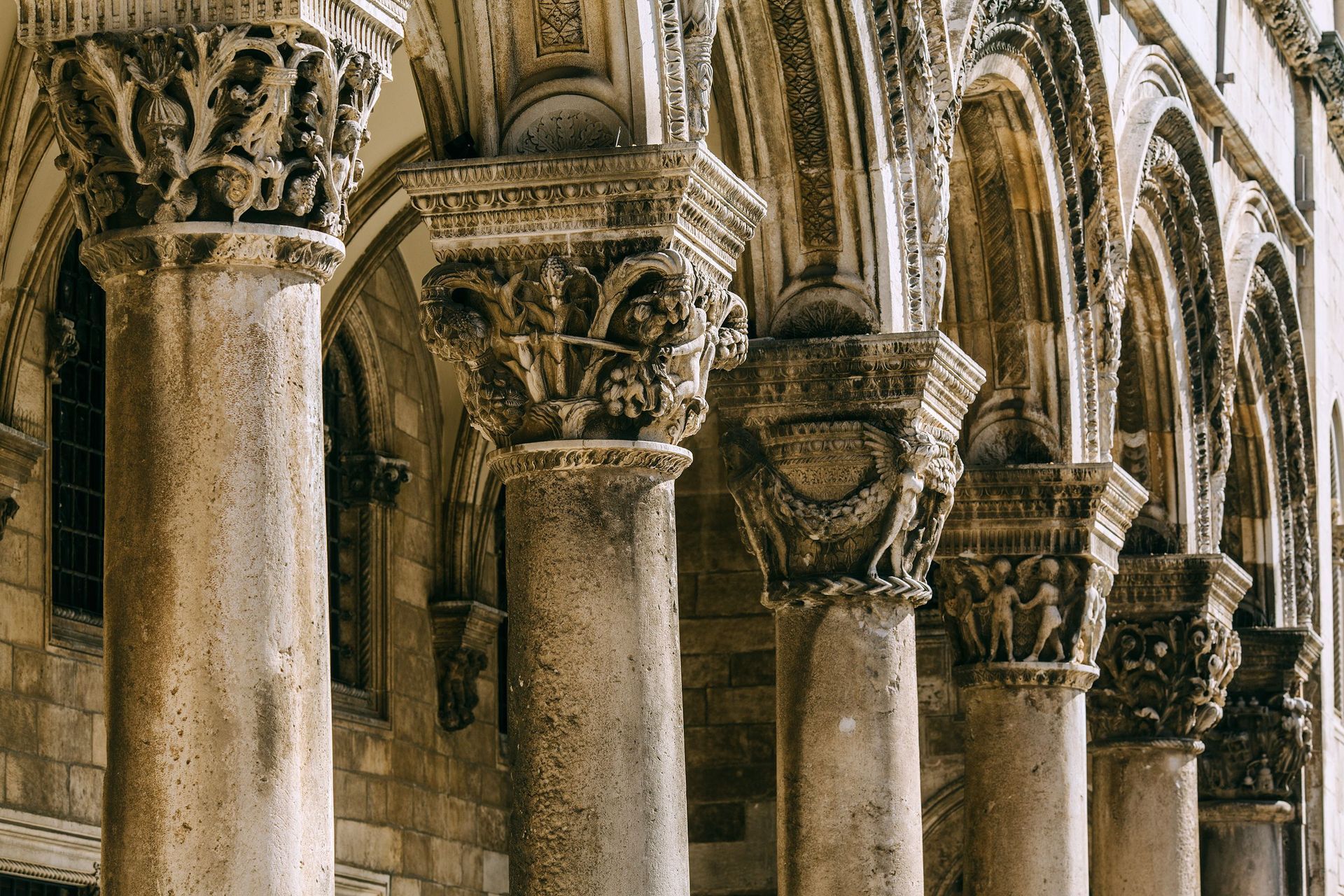
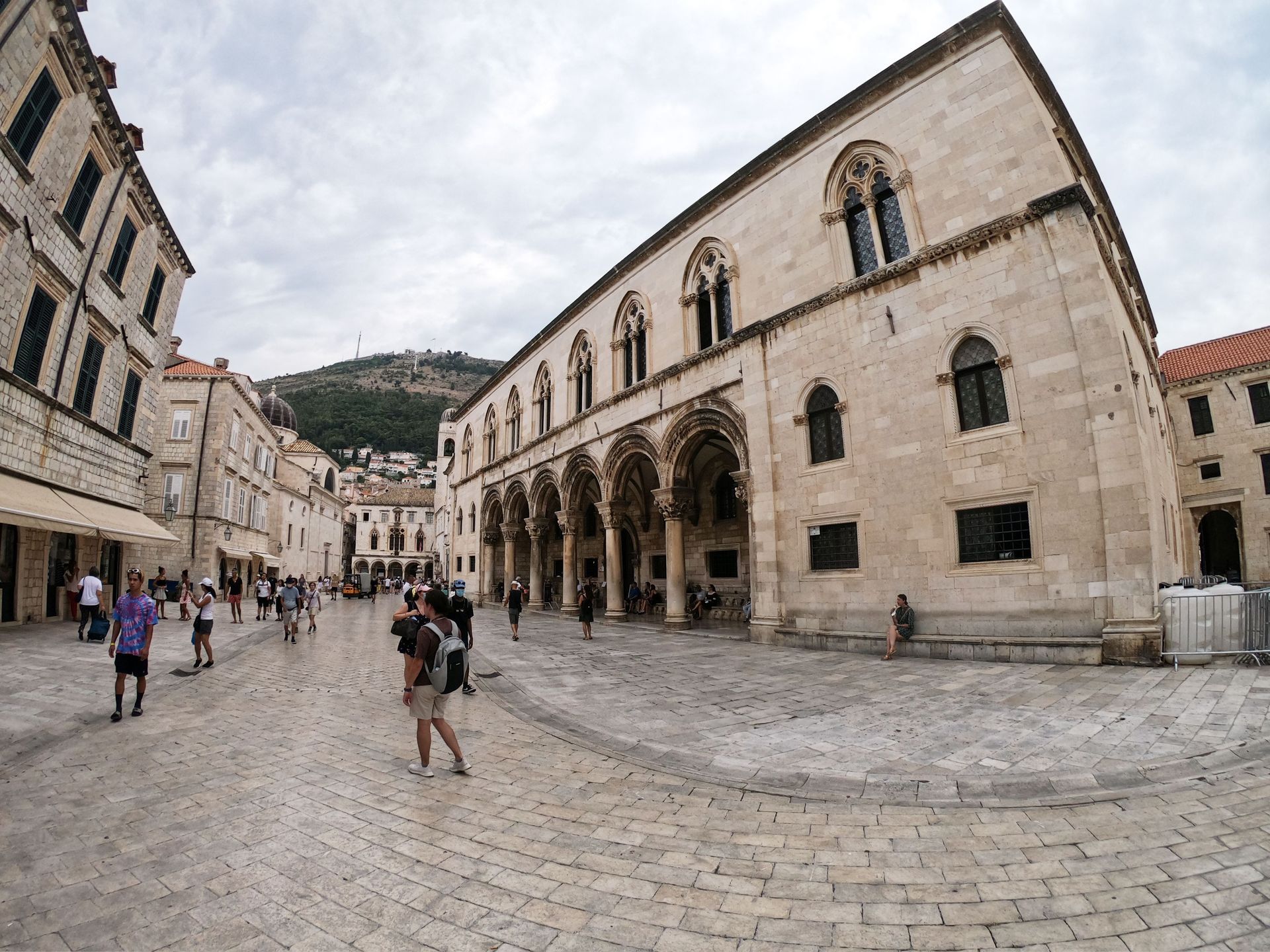
Sponza blends Gothic and Renaissance styles and captures the attention of architectural historians. The ground floor features a Renaissance portico resting on six Corinthian columns. The first floor displays late-Gothic windows. The second-floor windows move to Renaissance style. An alcove on the upper level contains a statue of St Blaise.
The palace's facade showcases Gothic windows, cloisters and inner courtyards characteristic of Gothic architecture's rich tradition. White arcades embellish the atrium inside. This space once served as Dubrovnik's liveliest commercial center.
This mixing of styles wasn't accidental.
Renaissance ideas were spreading north from Italy during the building's construction, but Gothic traditions still held sway over local builders. The result is a structure that captures both movements without committing to either. This makes Sponza architecturally distinct from most buildings in the Old Town.
Why Sponza Palace Was Never Just a Palace
The word "palace" misleads most visitors. Sponza never housed royalty or served as anyone's residence. It functioned as the operational center where Dubrovnik's economic power took physical form.
Sponza's Role as Dubrovnik's Customs House
Merchants arriving from Mediterranean ports brought their goods through Sponza's arcaded atrium. Customs officials inspected and taxed everything from spices to textiles there. The ground floor operated as a bonded warehouse where goods waited for clearance. This space filled with sailors, businessmen and Republic officials conducting the daily transactions that kept Dubrovnik functioning during peak trading seasons.
The building's alternative name, Divona, comes from "dogana," meaning customs. This wasn't bureaucratic paperwork in a back office. The atrium served as one of the city's liveliest commercial centers, where deals were negotiated and fortunes changed hands.
The State Treasury and Banking Functions
A section of Sponza operated as the Republic's mint from 1377 onward. It coined money until the early 19th century when the Republic fell. This mint represented more than currency production. It symbolized Dubrovnik's economic sovereignty and its capacity to conduct independent trade throughout the Mediterranean.
The palace simultaneously housed the state treasury and an armory. These weren't separate institutions scattered throughout the city. They operated under one roof and concentrated the Republic's financial and military resources in a single, defensible structure.
How Sponza Became a Cultural and Educational Center
Sponza's upper floors transformed into something unexpected for a customs house during the late 16th century. The Academia dei Concordi, also called the Academy of the Concordant and the Idle, established Dubrovnik's first literary institution here. Educated nobles and intellectuals gathered in the large first-floor hall to debate literature and art.
The city's first school also operated within these walls. Therefore, merchants conducting customs business on the ground floor worked beneath poets and scholars debating Renaissance ideas above them.
The Latin Inscription About Honest Trade
A Latin inscription above the atrium passage addresses merchants: "Our weights do not permit cheating or being cheated. When I weigh goods, God weighs me". This wasn't decorative philosophy. It served as a public warning that dishonest measurements and fraudulent trade would not go unnoticed in a republic whose entire existence depended on commercial reputation and diplomatic trust.
The Building That Survived When Most of Dubrovnik Didn't
What Happened During the 1667 Earthquake
The earthquake struck on April 6, 1667, at around 8:45 in the morning. It lasted between 8 and 15 seconds and destroyed most of Dubrovnik. Those few seconds killed around 3,000 to 5,000 people. The city's Rector, Simone Ghetaldi, died along with over three-quarters of all public buildings. A tsunami followed. Fires raged for 20 days, and the whole city turned into rubble.
Debris blocked passage through Stradun as buildings lining the street were destroyed. The Rector's Palace and Major Council Hall suffered severe damage. Nearly everything that defined pre-earthquake Dubrovnik disappeared.
Why Sponza Palace Survived the Disaster
Sponza survived the earthquake almost undamaged and preserved its original Gothic-Renaissance form. The Wikipedia source mentions Sponza suffered "severe damage", but multiple other sources confirm it survived comparatively intact. All but one of these structures fell. Only the Sponza and Rector's Palace remained standing after the disaster.
This survival allowed state affairs to continue within their offices and potentially saved the Republic from crisis.
The Dubrovnik State Archives Inside Sponza Today
The palace now houses the Dubrovnik State Archives. The collection has documents dating back to the 12th century, with the earliest from 1022. It has more than 7,000 volumes of manuscripts and around 100,000 individual manuscripts. The Rector's Palace kept these files before. The archives are among the richest in Europe and document the Republic's structure from ancient history through contemporary times.
The Memorial Room for Dubrovnik Defenders
A memorial displays photographs of young people who perished between 1991 and 1995 during the battle for Dubrovnik at the entrance. Two attacks during 1991 damaged the archive building heavily. The room honors defenders who died protecting the city during the siege. Their portraits line the walls alongside documents and artifacts from the conflict.
What Makes Sponza Palace Special for Visitors Today
Architectural Details Worth Noticing
Stand in front of Sponza and look at how the facade shifts styles as your eyes move upward. The columns feature carved details that distinguish them from other buildings along Stradun. The stonework resembles lace carved from white stone, a result of the Andrijić brothers' craftsmanship.
The Atrium and White Arcades
Step inside and the white arcades surrounding the courtyard create a peaceful space despite the crowds outside. This atrium once buzzed with merchants and traders. Today, it serves as a venue for exhibitions and events. The space moved from commercial hub to cultural center and retains its architectural character.
Sponza's Role in the Dubrovnik Summer Festival
Every year between July 10th and August 25th, the square in front of Sponza hosts the festival's opening ceremony. Actors dressed as the Rector and Dubrovnik aristocrats appear on the upper terrace. They recreate the Republic's ceremonial traditions. The palace also serves as a performance venue throughout the festival.
Why Sponza Palace Matters More Than Most Visitors Realize
Sponza represents continuity. It houses Europe's richest archives while hosting weddings, exhibitions and cultural events. The building connects medieval trade practices to contemporary cultural life and still serves public functions five centuries after construction.
A Building That Remembers Dubrovnik Before 1667
Most visitors walk past Sponza without a second glance, but now you know what survived inside those walls. The building connects Dubrovnik's trading past to its present cultural life. It houses centuries of documentation and still serves the city today. Next time you're in Luža square, look up at those mixed Gothic and Renaissance windows. You're standing in front of one of the few structures that remembers what Dubrovnik looked like before everything changed in 1667.