Why Is the Adriatic Sea So Blue and Clear? The Science Behind Croatia's Famous Water
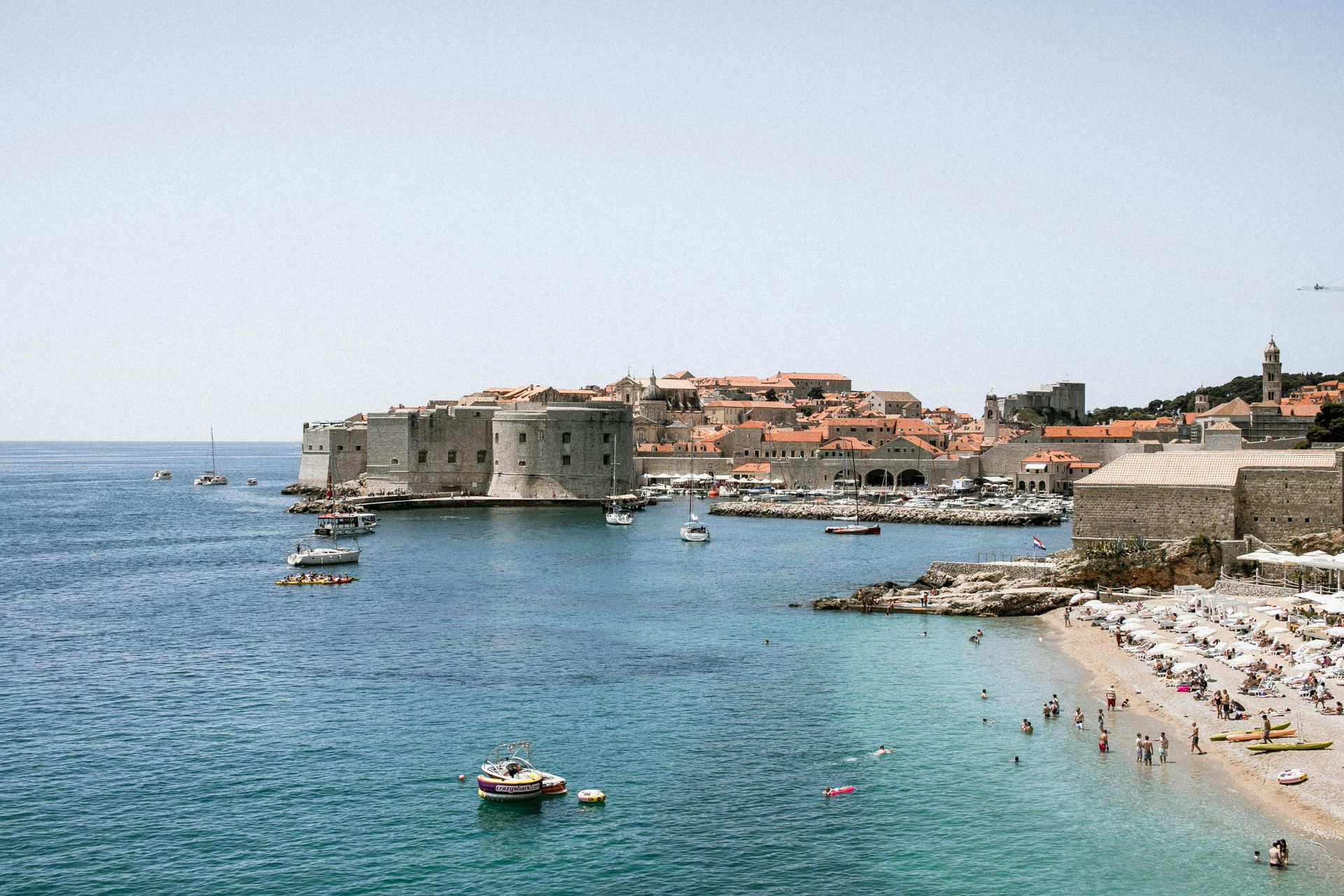
You've probably seen the photos. A boat floating above water so clear you can see its shadow on the seabed. Small coves glowing turquoise. The deep blue Adriatic stretching beyond Dubrovnik's medieval city walls.
And if you've ever visited Croatia, you know the photos aren't necessarily exaggerating.
But have you ever wondered why the Adriatic Sea looks this way?
Why is the water around Dubrovnik so clear? Why does it change from bright turquoise to almost navy blue within a short distance? And does that beautiful color actually mean the sea is clean?
The answer has surprisingly little to do with photo filters and much more to do with sunlight, marine biology, and the shape of Croatia's coastline.
Here's what makes the Adriatic's famous blue water so special.
Why Is the Adriatic Sea So Clear?
The short answer is that much of the Adriatic, particularly along Croatia's eastern coastline, contains relatively low concentrations of the tiny particles and microscopic organisms that can make seawater appear cloudy.
When fewer particles are suspended in the water, sunlight can travel farther through it. That's why you can sometimes see rocks, fish, and the seabed several meters below the surface.
But there's more to it than that.
Water clarity depends on several factors working together: the amount of plankton in the water, sediment entering from rivers or being stirred up from the bottom, local currents, and even the weather.
Not every part of the Adriatic is equally transparent, either.
The northern Adriatic, for example, is influenced by large rivers such as the Po, which introduce freshwater, nutrients, and sediment. Different conditions occur farther south, particularly along stretches of the eastern Adriatic.
This helps explain why the water around Dubrovnik and its nearby islands can look remarkably clear, especially on calm days.
And then there's the question that makes the whole thing even more interesting.
Why Is the Adriatic Sea So Blue?
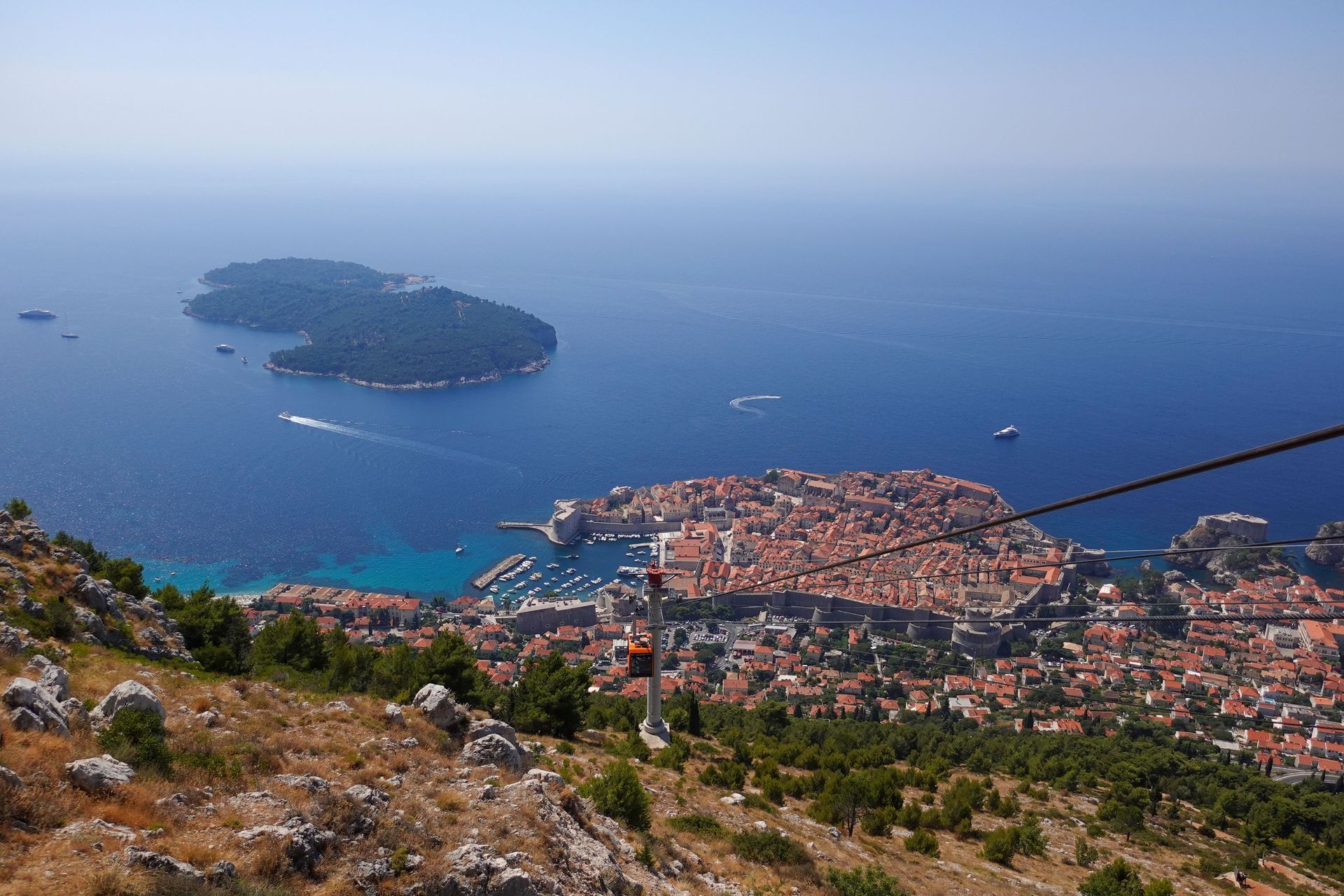
Here's a common explanation you've probably heard: the sea is blue because it reflects the sky.
It sounds reasonable. Unfortunately, it's only part of the story.
The sky does influence how the sea looks from above, but seawater has its own natural blue color.
Sunlight might look white, but it contains different colors, including red, orange, yellow, green, and blue.
When sunlight enters water, those colors don't behave in the same way.
Water absorbs red and orange light relatively quickly, while blue wavelengths penetrate farther. Some of that remaining blue light is scattered back toward our eyes.
That's why deep, clear water often appears blue.
The National Oceanic and Atmospheric Administration (NOAA) explains this as a natural filtering process. Water absorbs different parts of the light spectrum at different rates, leaving blue wavelengths more prominent.
So even under a cloudy sky, the sea doesn't simply lose its natural blue color.
And that's also why the Adriatic can look dramatically different depending on where you're standing.
Why Does the Water Look Turquoise in Some Places and Dark Blue in Others?
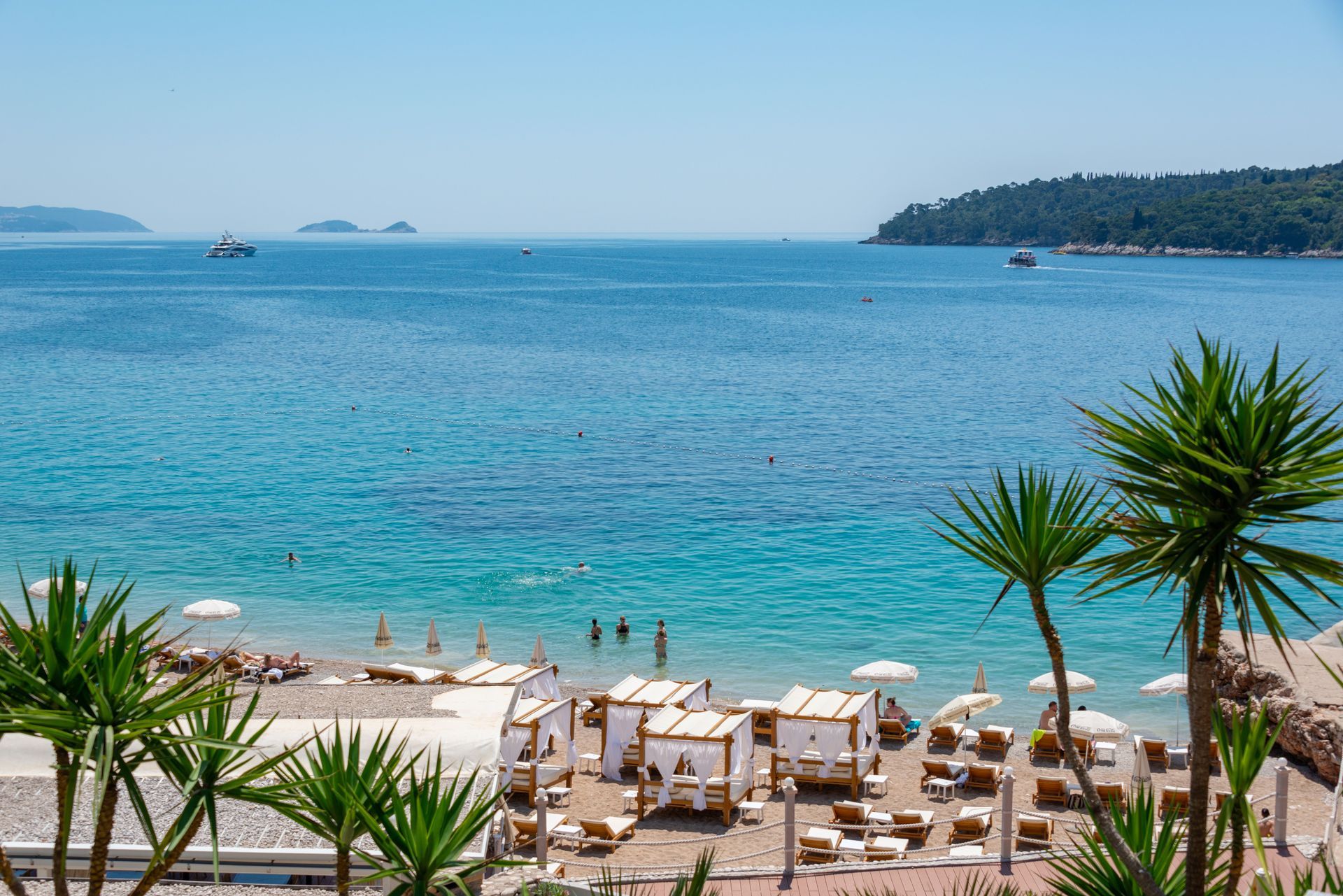
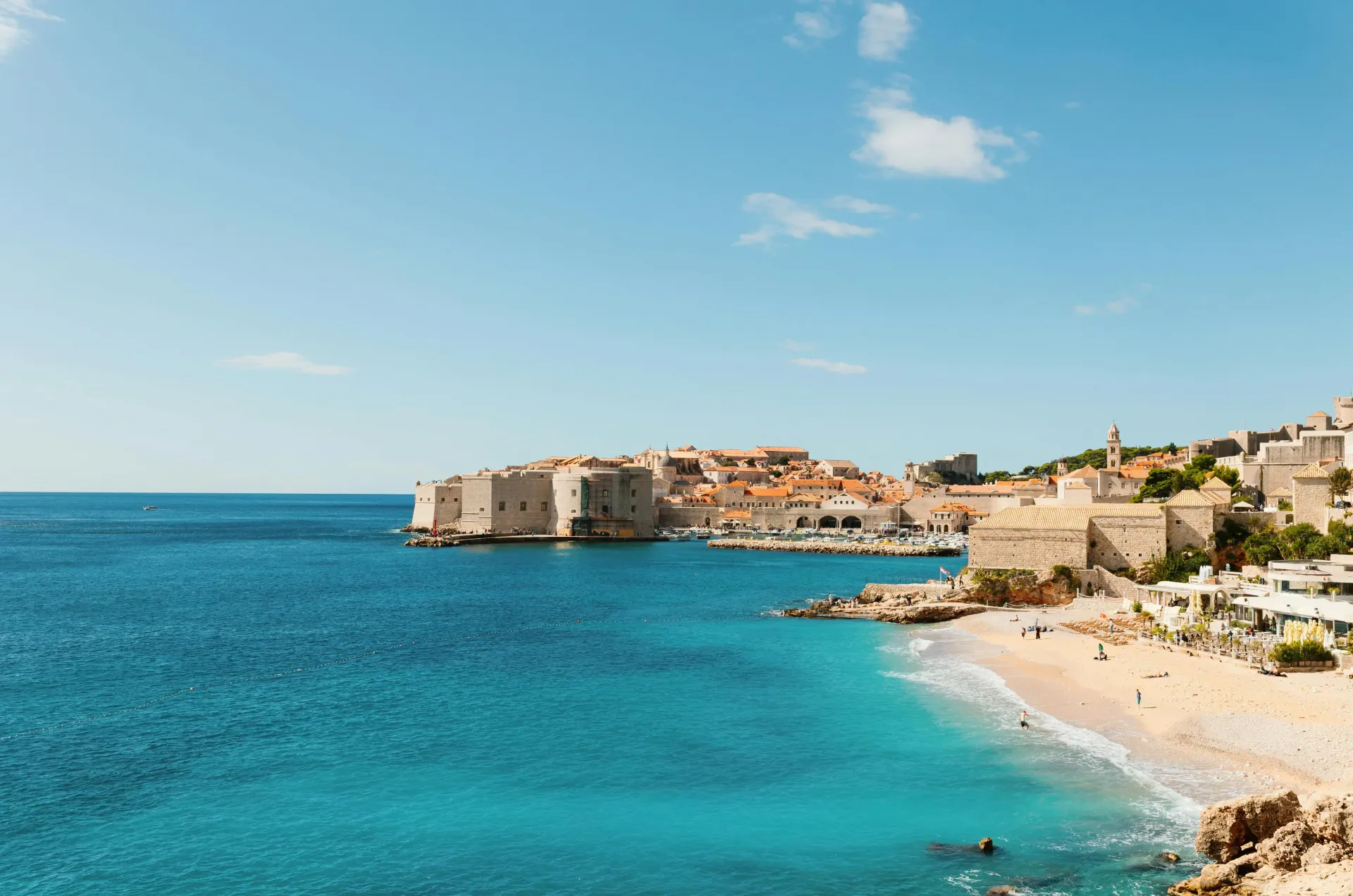
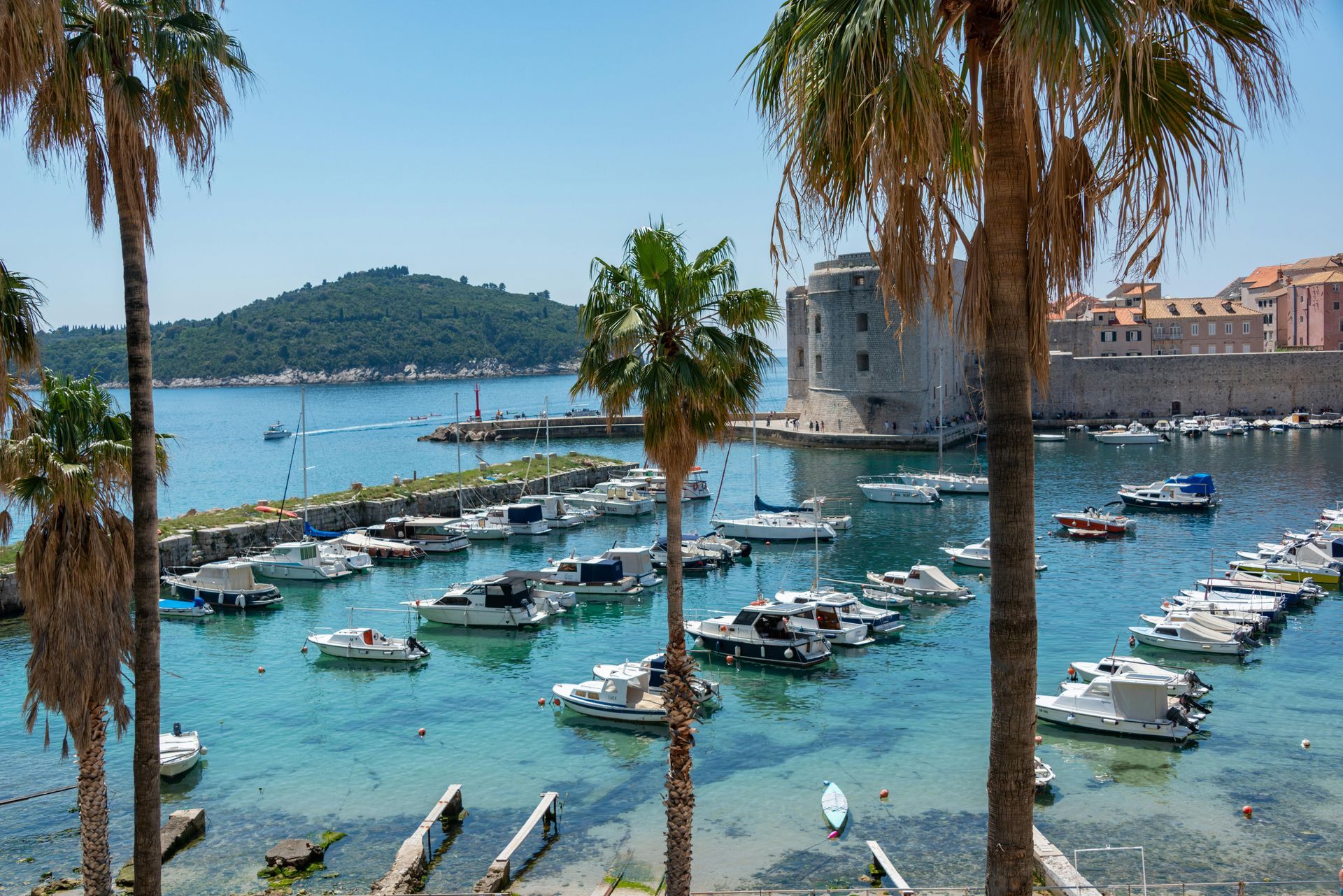
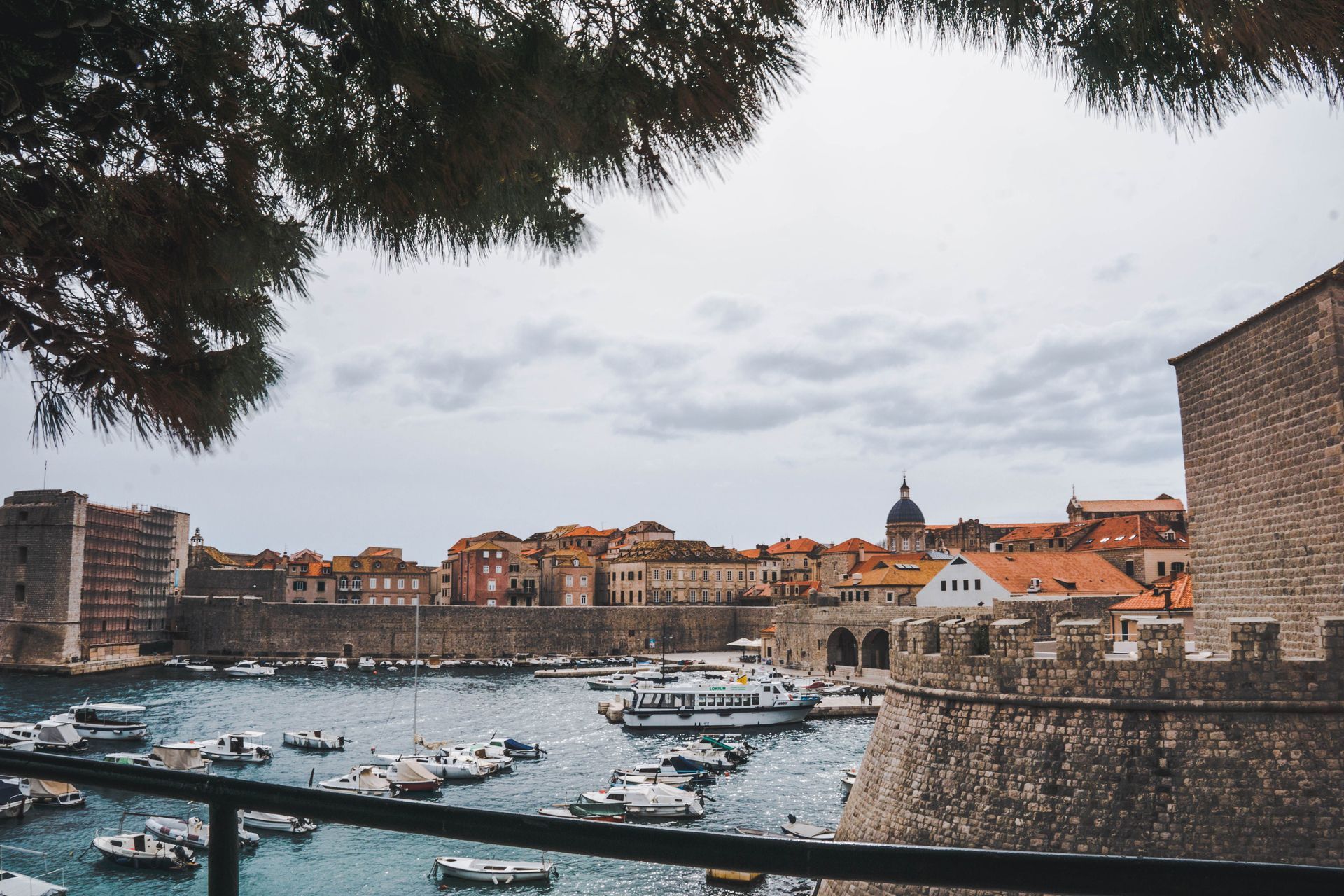
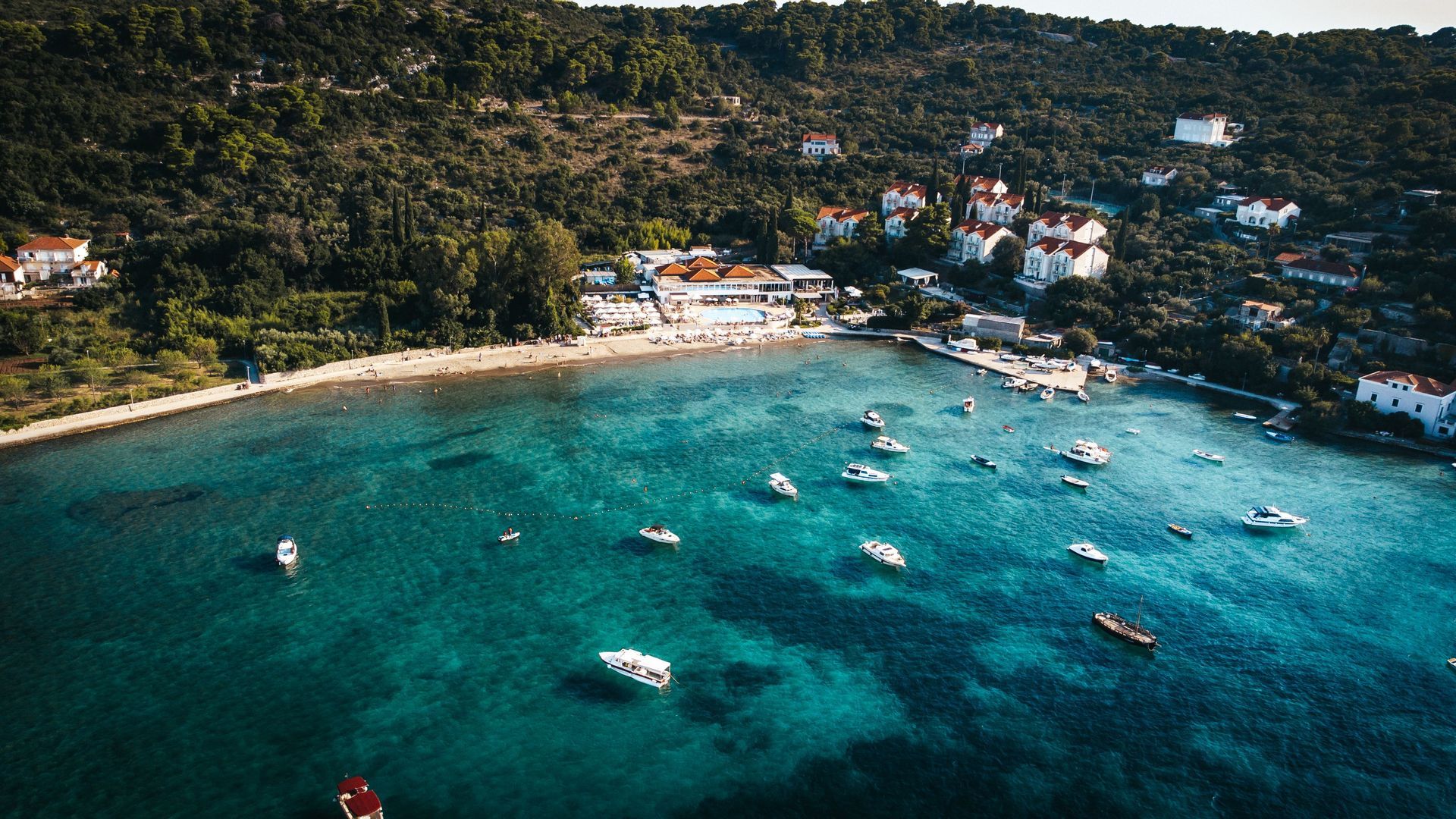
Look at a photograph of Dubrovnik's coastline and you'll often notice several shades of blue in the same image.
Near the rocks, the water might be bright turquoise. A little farther away, it turns deeper blue. Beyond the islands, it can appear almost navy.
In many cases, the difference comes down to water depth and the seabed beneath it.
In shallow, clear water, sunlight can reach the bottom and reflect back upward. A light-colored seabed can make the water appear brighter, sometimes creating those beautiful turquoise shades.
As the water gets deeper, less light returns from the seabed. The water gradually takes on darker blue tones.
That doesn't necessarily mean the darker water is dirtier.
It usually means you're looking through a greater depth of water.
The Woods Hole Oceanographic Institution explains how depth, reflected light, and particles in the water combine to create the colors we see.
Next time you're on a boat near Dubrovnik, look at the color of the water as you pass from a shallow cove into deeper sea. You can often see this transition happening right in front of you.
What Makes the Croatian Adriatic Different?
One of the things that makes Croatia's coastline so recognizable is its combination of rocky shores, islands, and unusually transparent water.
But the rocks aren't the whole explanation.
A major factor is something scientists call oligotrophic conditions.
That sounds complicated, but the concept is relatively simple.
Oligotrophic waters contain low concentrations of nutrients that support microscopic algae and other plankton.
With less phytoplankton growing in the water, there can be fewer particles interfering with sunlight. This often contributes to clearer, bluer water.
Scientific research has identified oligotrophic conditions across much of the eastern Adriatic, although the exact conditions vary by location, season, and proximity to river mouths.
That doesn't mean the sea is lifeless.
Quite the opposite.
The Adriatic supports a variety of marine habitats, from rocky underwater environments to seagrass meadows and deeper offshore ecosystems.
Clear water simply allows sunlight to penetrate more effectively. It doesn't tell you how much marine life exists beneath the surface.
And there is another reason the coastline around Dubrovnik looks the way it does.
Why Do Dubrovnik's Rocky Beaches Often Have Such Clear Water?
If you're used to long sandy beaches, Dubrovnik might surprise you.
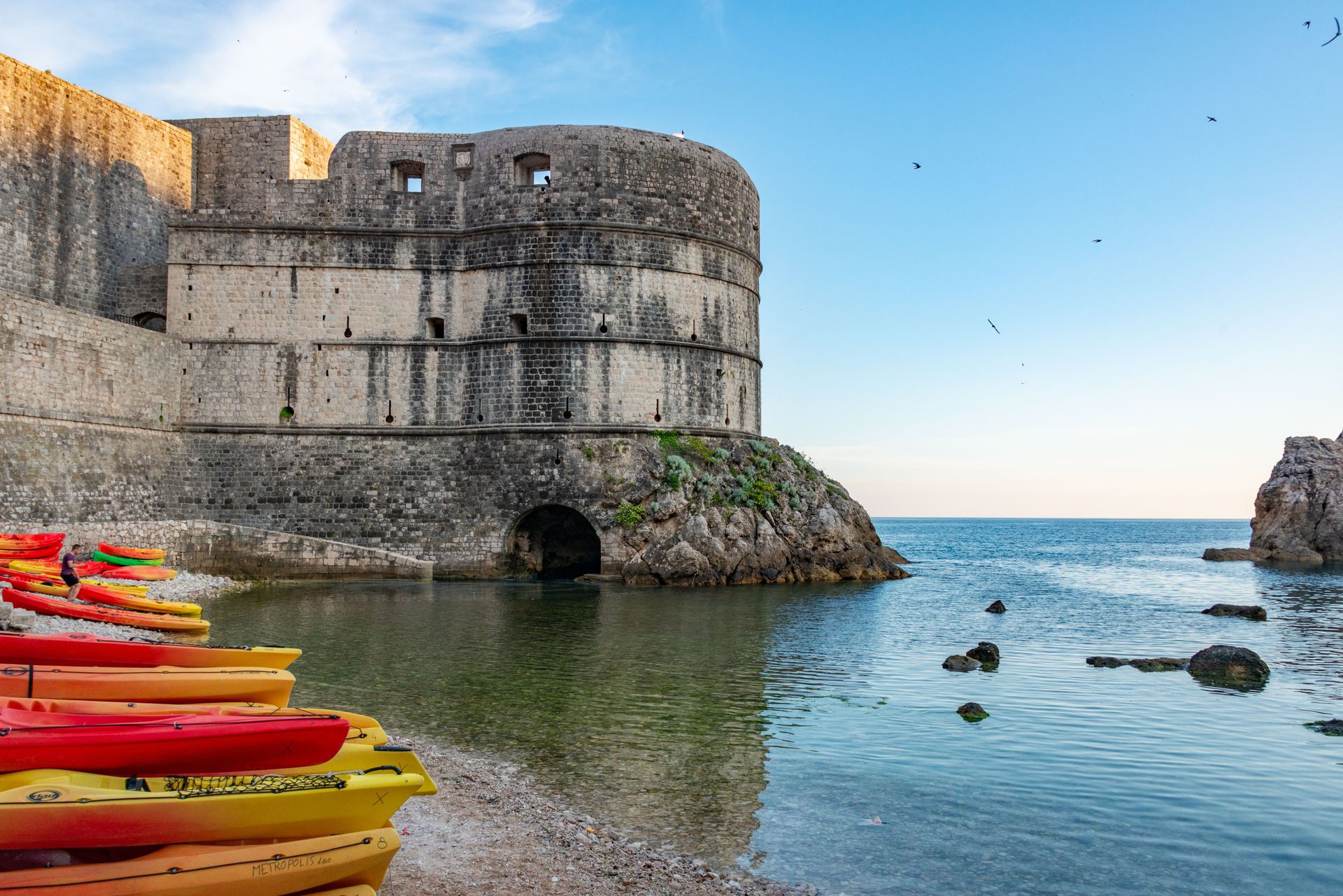
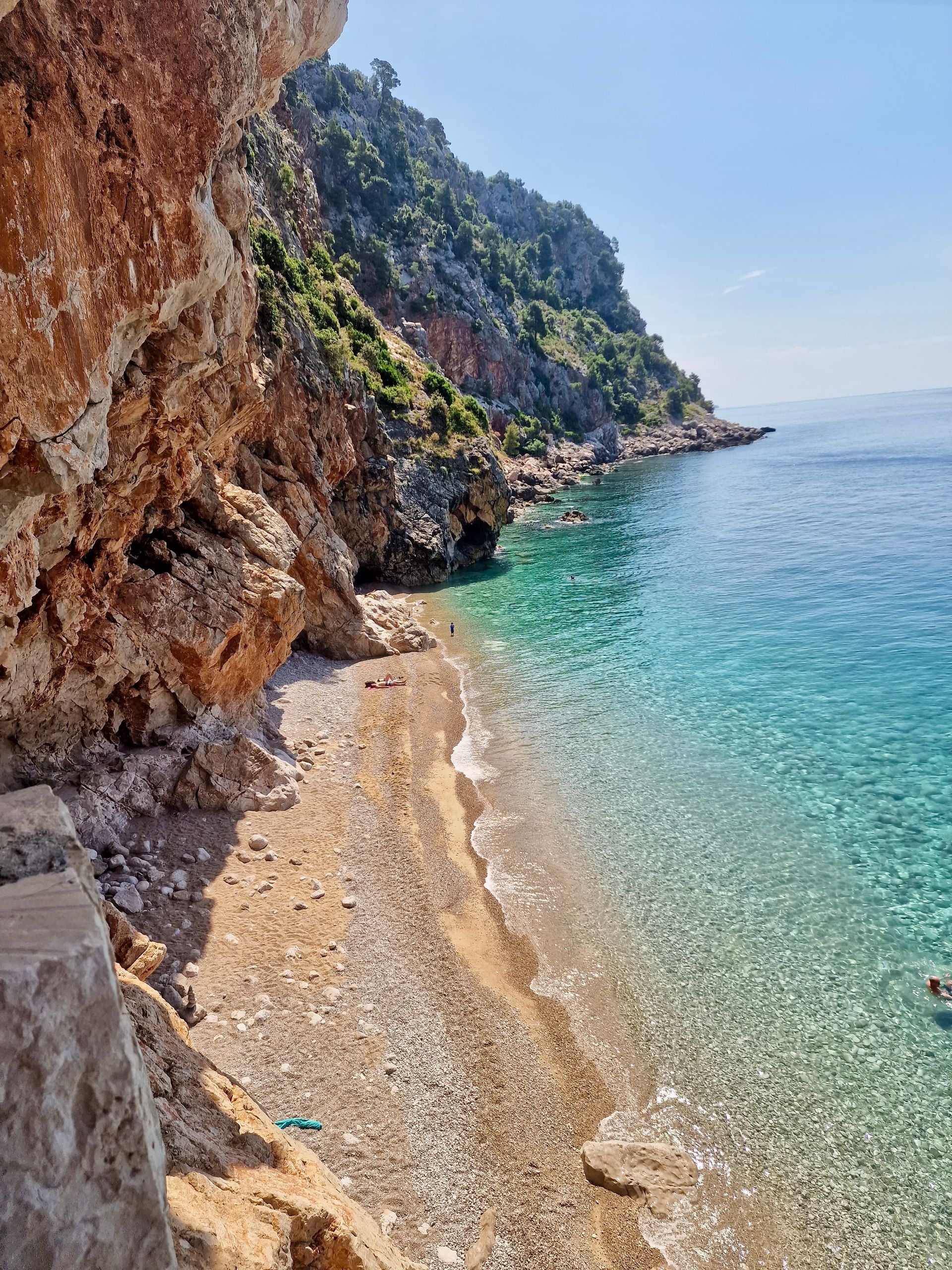
Much of the coastline consists of limestone cliffs, rocky swimming spots, and pebble beaches rather than broad stretches of fine sand.
That landscape plays a part in the appearance of the water.
Fine sediment can easily become suspended when waves break or swimmers disturb a shallow seabed. When enough particles enter the water, visibility decreases.
Rocky and coarse-pebble areas often have less fine material available to be stirred up, although sheltered coves can still accumulate sediment.
This means that, under suitable conditions, water around rocky sections of Dubrovnik's coastline can look particularly transparent.
Sometimes you can see individual rocks beneath the surface long before reaching them.
Of course, even the clearest-looking swimming spot can become cloudy after strong waves or heavy rain.
And a sandy beach doesn't automatically mean murky water, either.
It's the combination of bottom material, water movement, and suspended particles that matters.
If you're curious about the different swimming spots, we've explored them in our guide to the
best beaches near Dubrovnik.
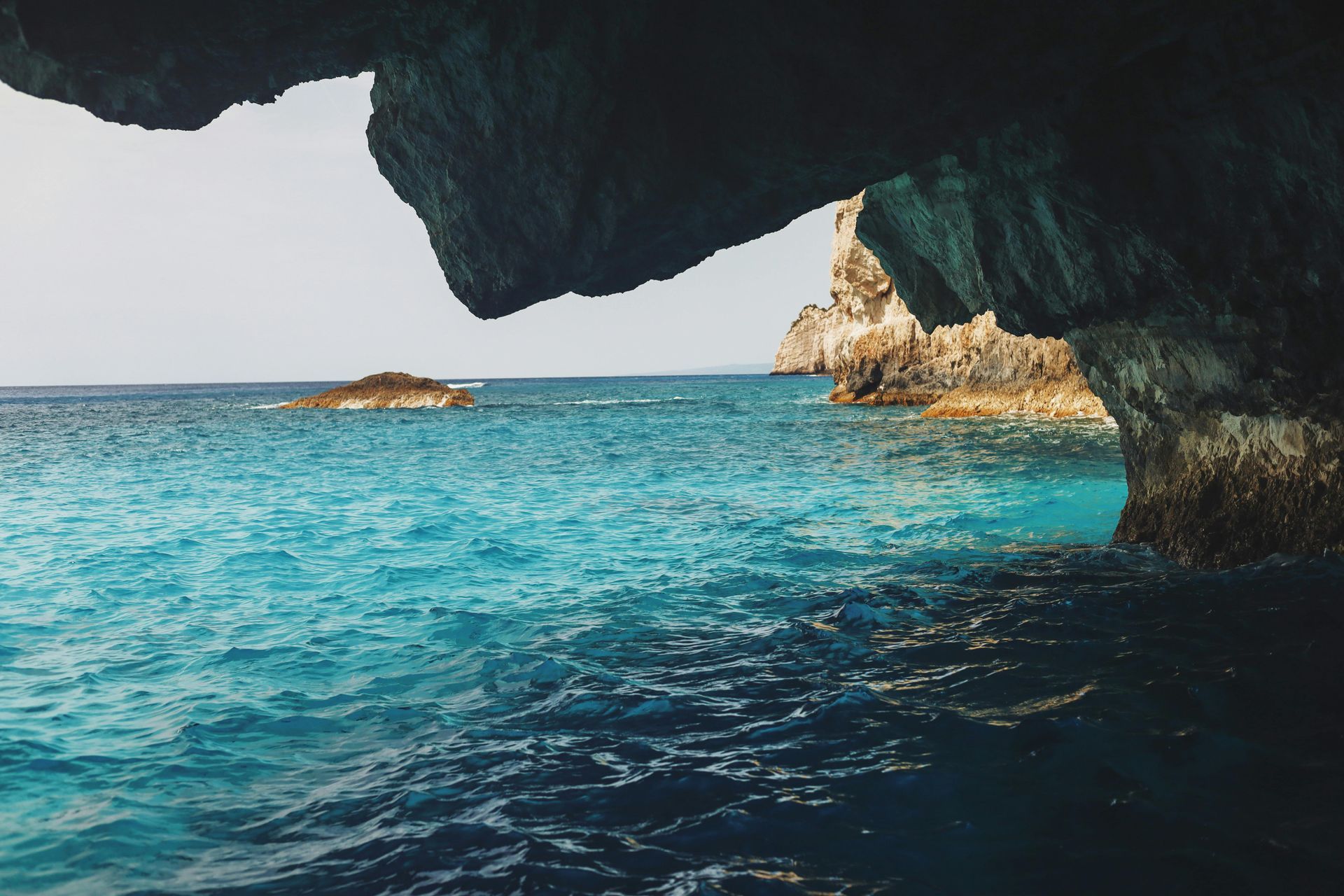
The Blue Cave: When Sunlight Creates Something Extraordinary
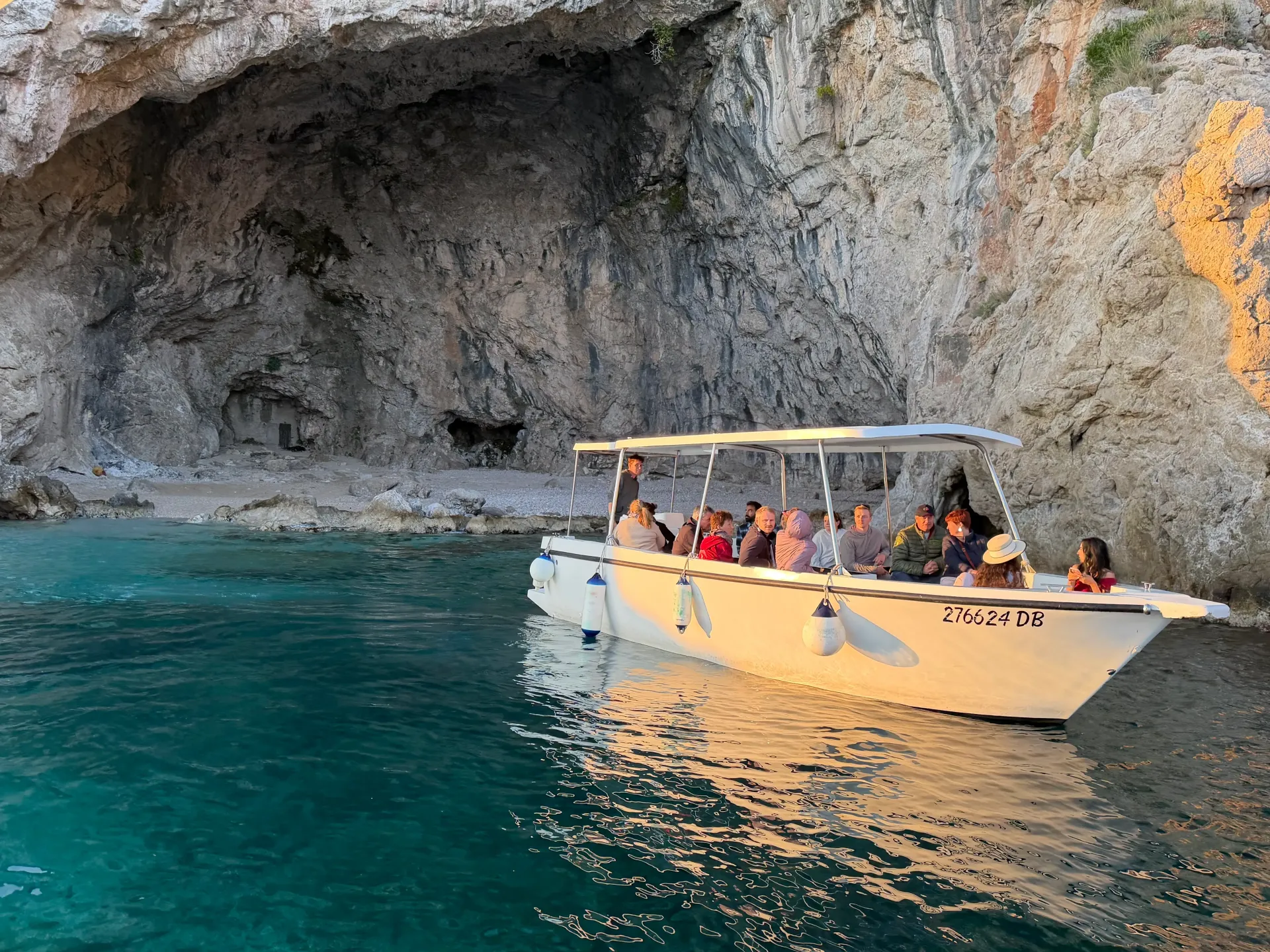
One of the most fascinating examples of how light changes the appearance of seawater can be found on Koločep Island, part of the Elaphiti Islands near Dubrovnik.
The island is home to the Blue Cave, known for the vivid blue light that appears inside under favorable conditions.
But the water isn't naturally glowing, and there's no mysterious substance giving it that color.
The effect comes from sunlight interacting with the cave's openings, the water, and the surrounding underwater surfaces.
As light enters, the water absorbs and scatters different wavelengths. Under the right conditions, the remaining blue light creates the distinctive illuminated appearance that gives the cave its name.
The effect varies with sunlight, weather, water clarity, and viewing position.
That's why visiting a sea cave on a cloudy day can feel different from visiting it in bright sunshine.
It also explains why photographs don't always capture what the experience actually looks like.
Unlike a simple photograph of turquoise water, the Blue Cave lets you experience the interaction between light and seawater from inside a natural rock formation.
If you'd like to know more about visiting, our guide explains
how to reach the Blue Cave from Dubrovnik and what to expect.
Does Clear Blue Water Mean the Sea Is Clean?
This is where things get especially interesting.
Clear water and clean water are not the same thing.
A sea can look perfectly transparent and still contain contaminants that are invisible to the human eye.
Likewise, water that appears greenish or cloudy isn't automatically polluted.
Microscopic algae, harmless particles, sediment, and natural organic material can all affect the appearance of seawater.
So while clarity is one characteristic of the Adriatic that visitors notice immediately, it shouldn't be used as the only measure of water quality.
Fortunately, Croatia doesn't rely on appearances to determine whether its bathing waters are safe.
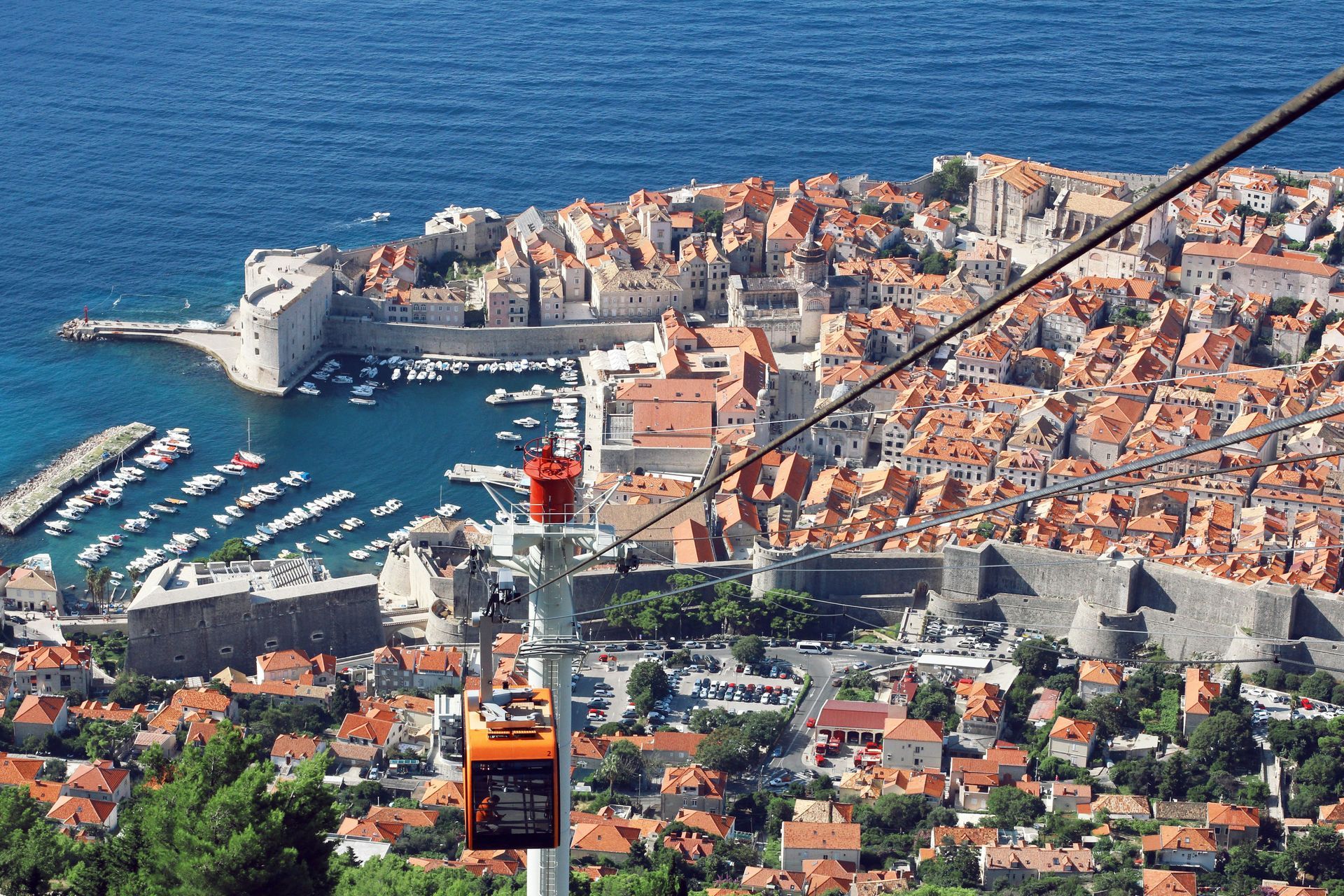
How Is Sea Water Quality Tested in Croatia?
Croatia has an official monitoring program that regularly assesses bathing water quality at designated coastal locations during the bathing season.
Testing includes microbiological indicators such as Escherichia coli and intestinal enterococci, which help authorities assess possible fecal contamination.
The results are published through the official Croatian sea bathing water quality portal, where visitors can check individual locations.
Croatia has consistently performed well in European bathing water assessments, with a high proportion of monitored coastal sites receiving excellent classifications.
However, conditions can change temporarily, particularly after heavy rainfall or pollution incidents.
That's why checking the latest local results is always more useful than relying on how blue the sea looks in a photograph.
The takeaway is simple: Dubrovnik's clear water is beautiful to look at, but scientific testing is what helps determine whether a particular swimming area meets bathing water quality standards.
Where Can You See Dubrovnik's Famous Blue Water?
You don't need to travel far from the city to appreciate the different colors of the Adriatic.
But where you view the sea from makes a surprising difference.
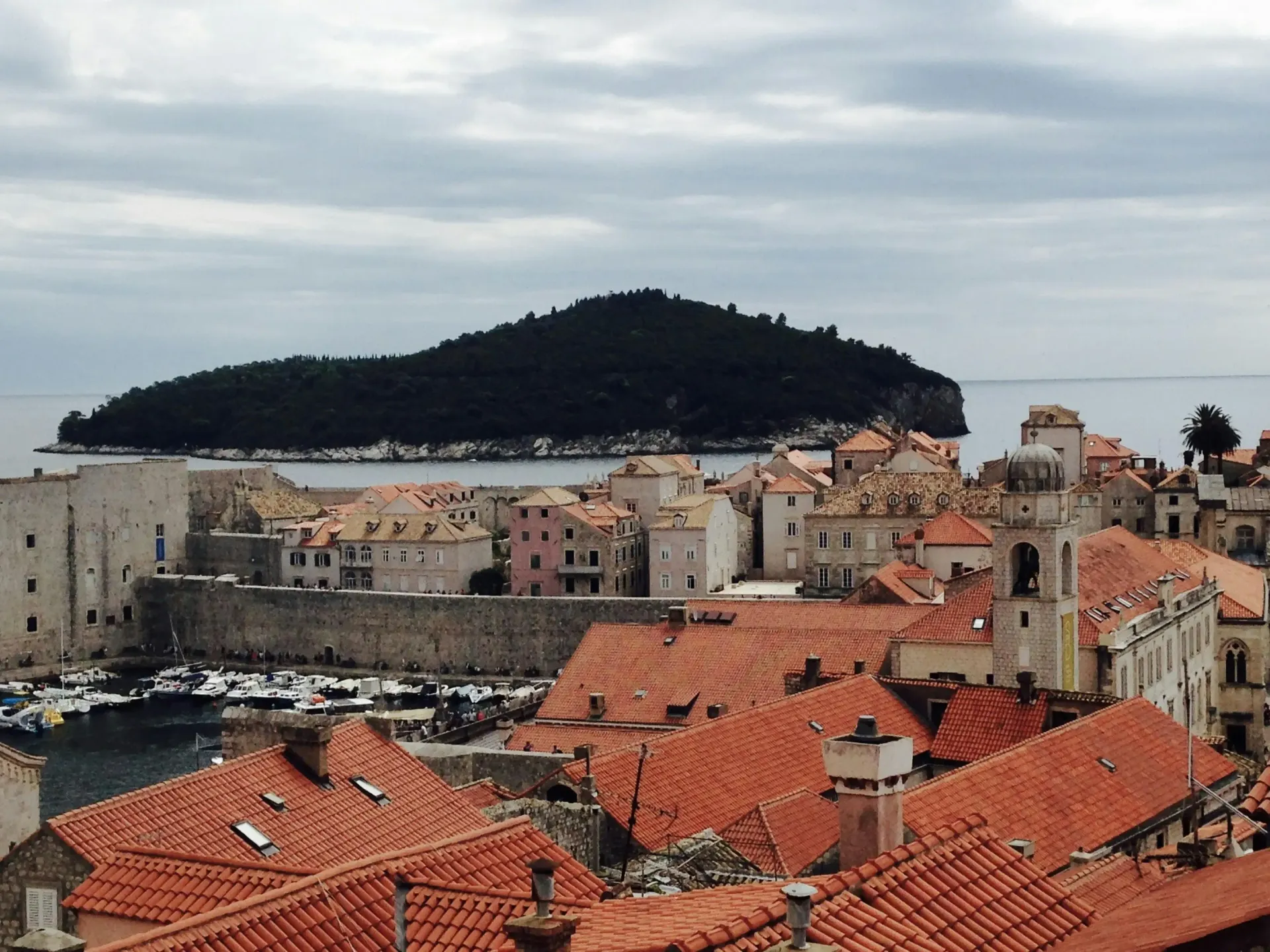
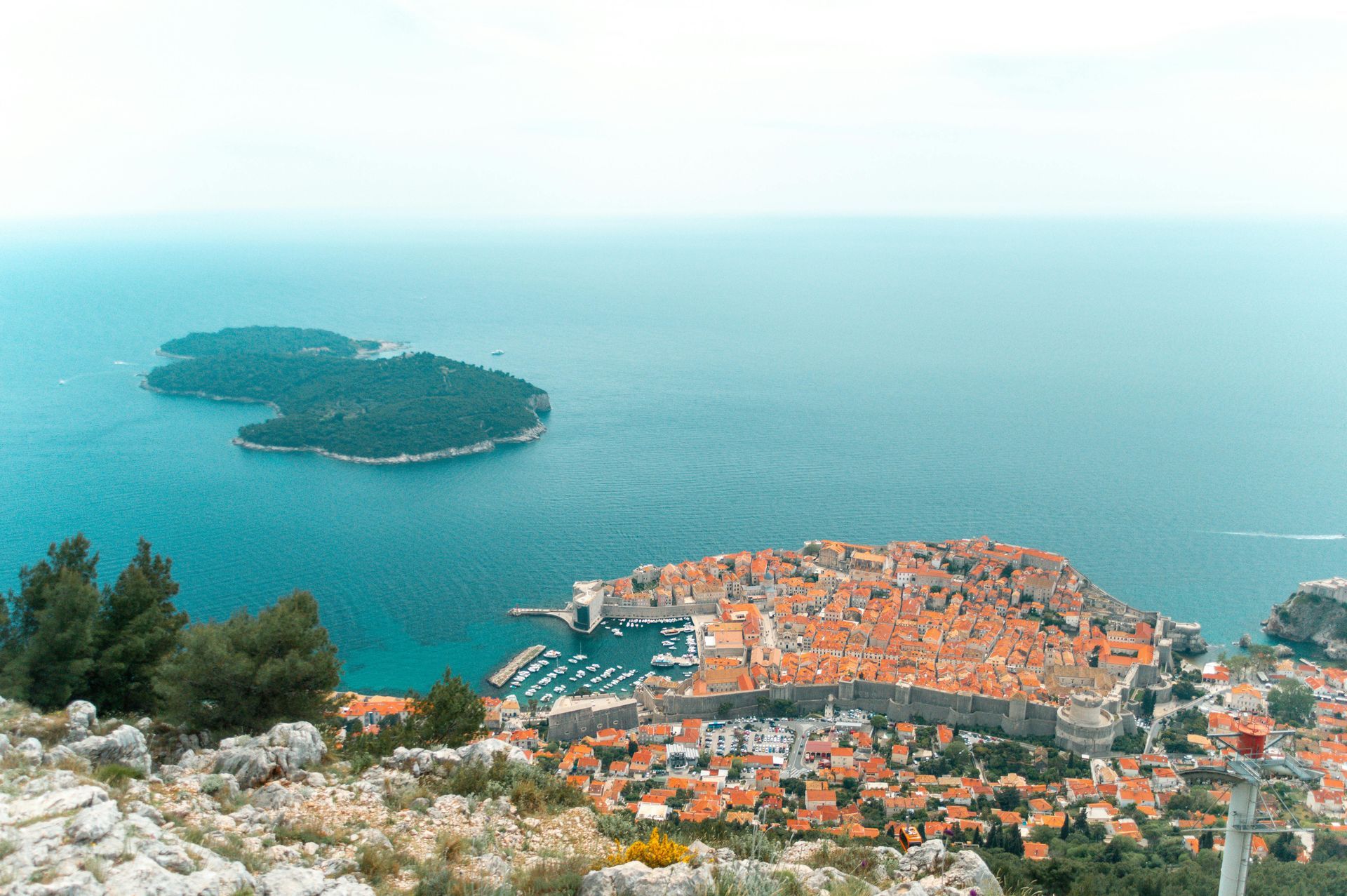
Around Lokrum Island
Just offshore from Dubrovnik Old Town, Lokrum is surrounded by rocky coastline and water that changes color with depth and sunlight.
From the shore, you can admire the contrast between dark rocks and clear water. From a boat, the surrounding coastline reveals a broader range of blues as the seabed slopes away.
The Elaphiti Islands
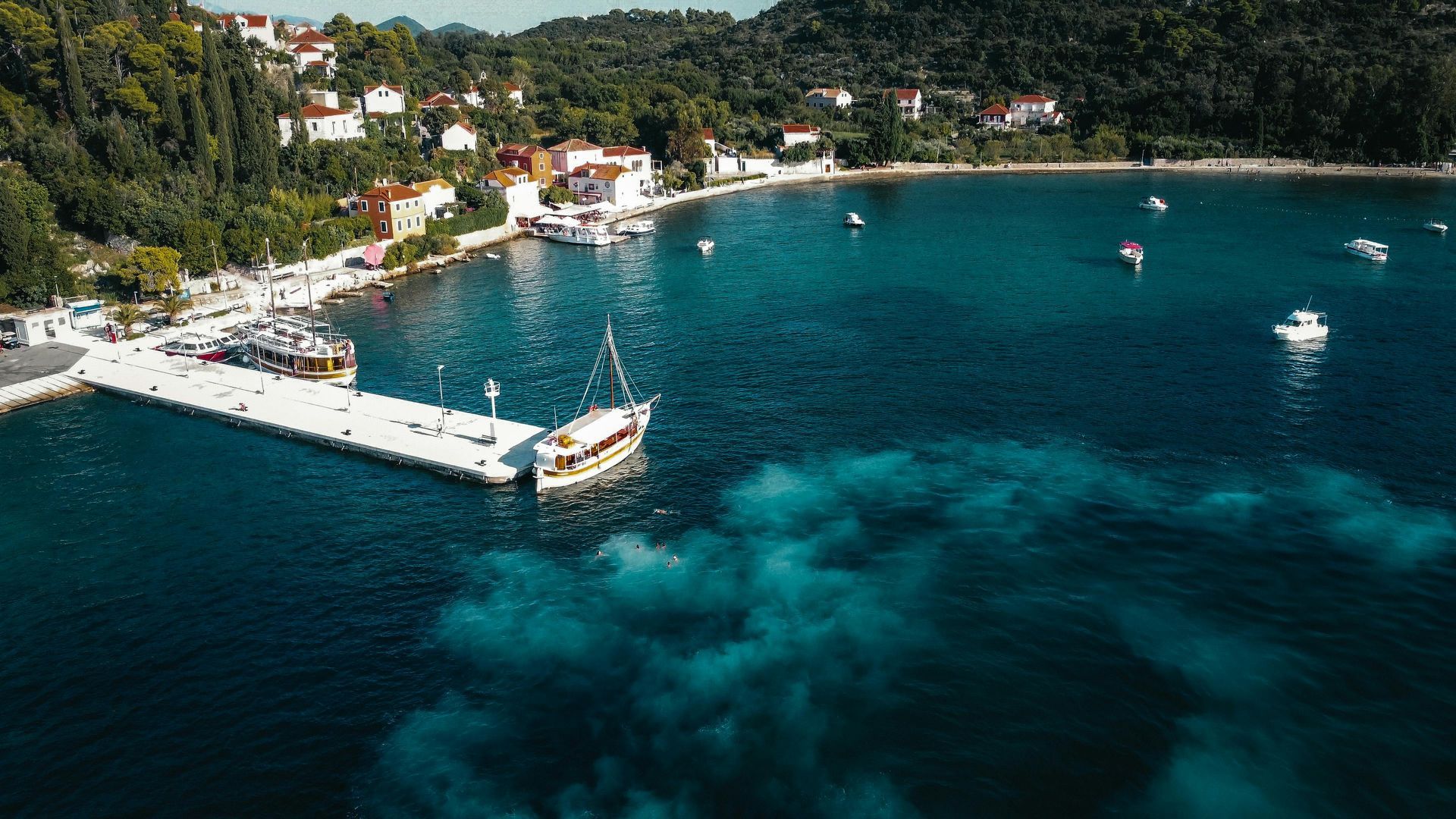
Koločep, Lopud, and Šipan offer a mixture of rocky coves, sheltered bays, and different seabed conditions.
Depending on the location, you might find pale turquoise shallows, clear water around rocky swimming areas, and deeper blue stretches between islands.
The islands are particularly interesting because relatively short distances can reveal completely different coastal landscapes.
If you're considering exploring them, read our guide to island hopping from Dubrovnik to help decide which experience suits your trip.
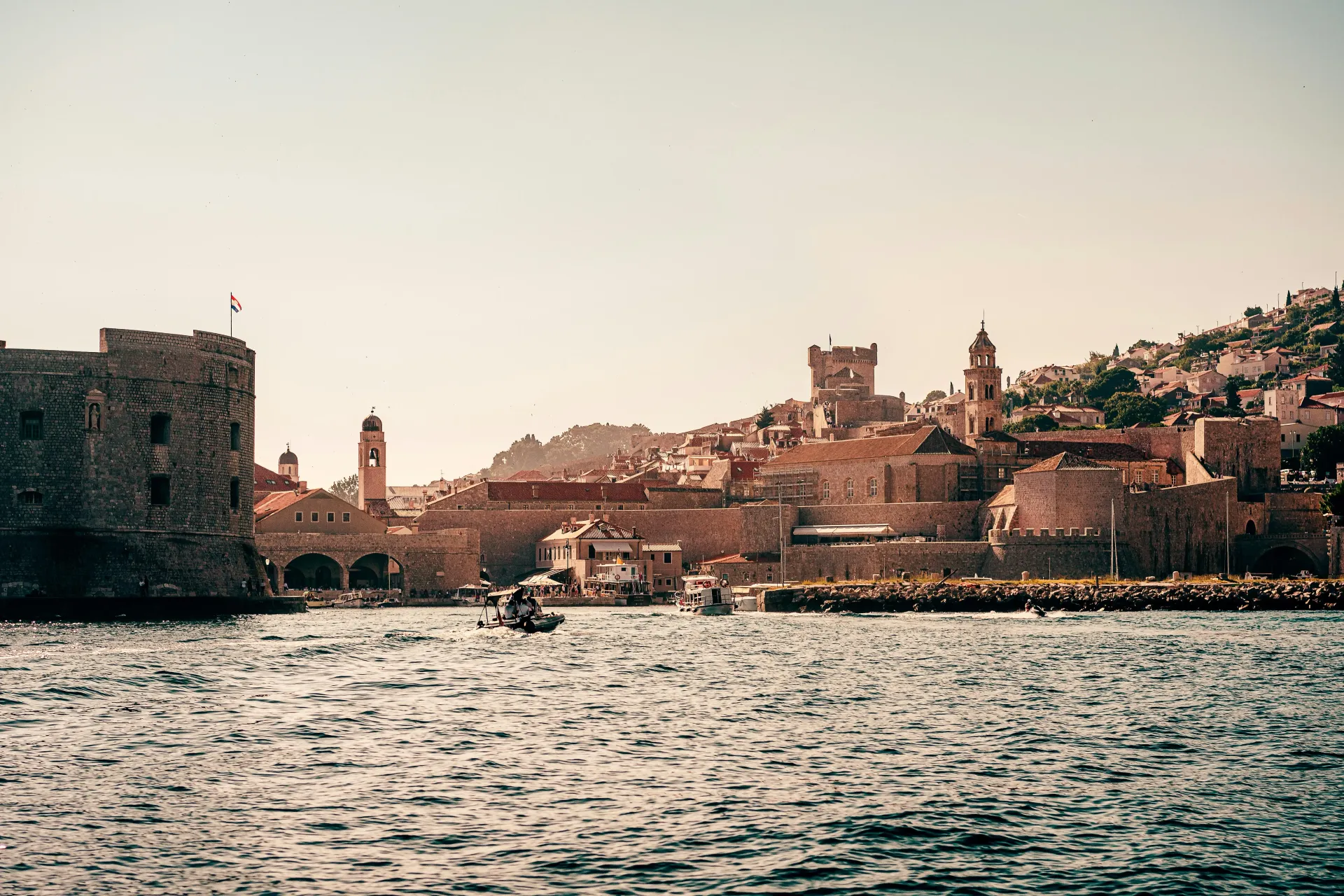
Along Dubrovnik's City Walls
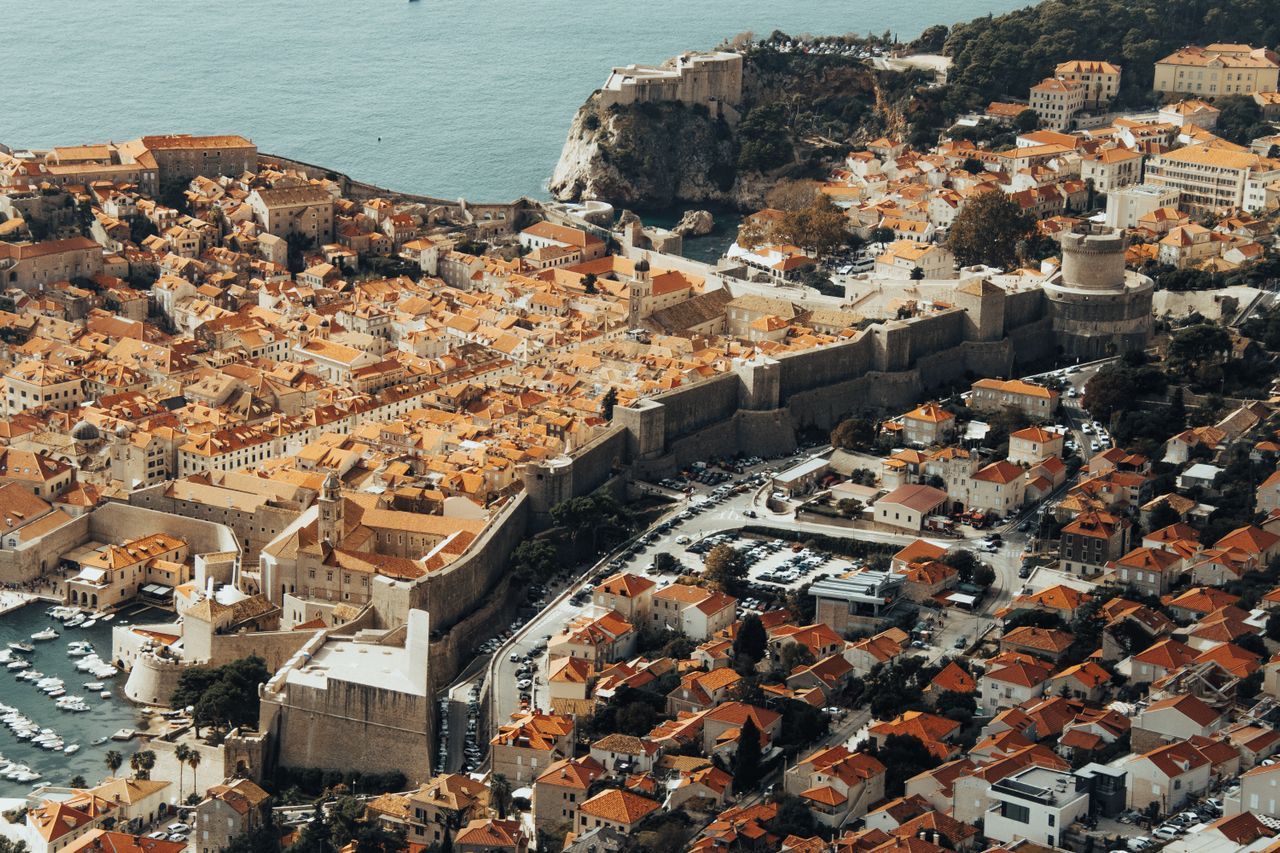
Most visitors admire Dubrovnik's famous walls from inside the Old Town or from a viewpoint above the city.
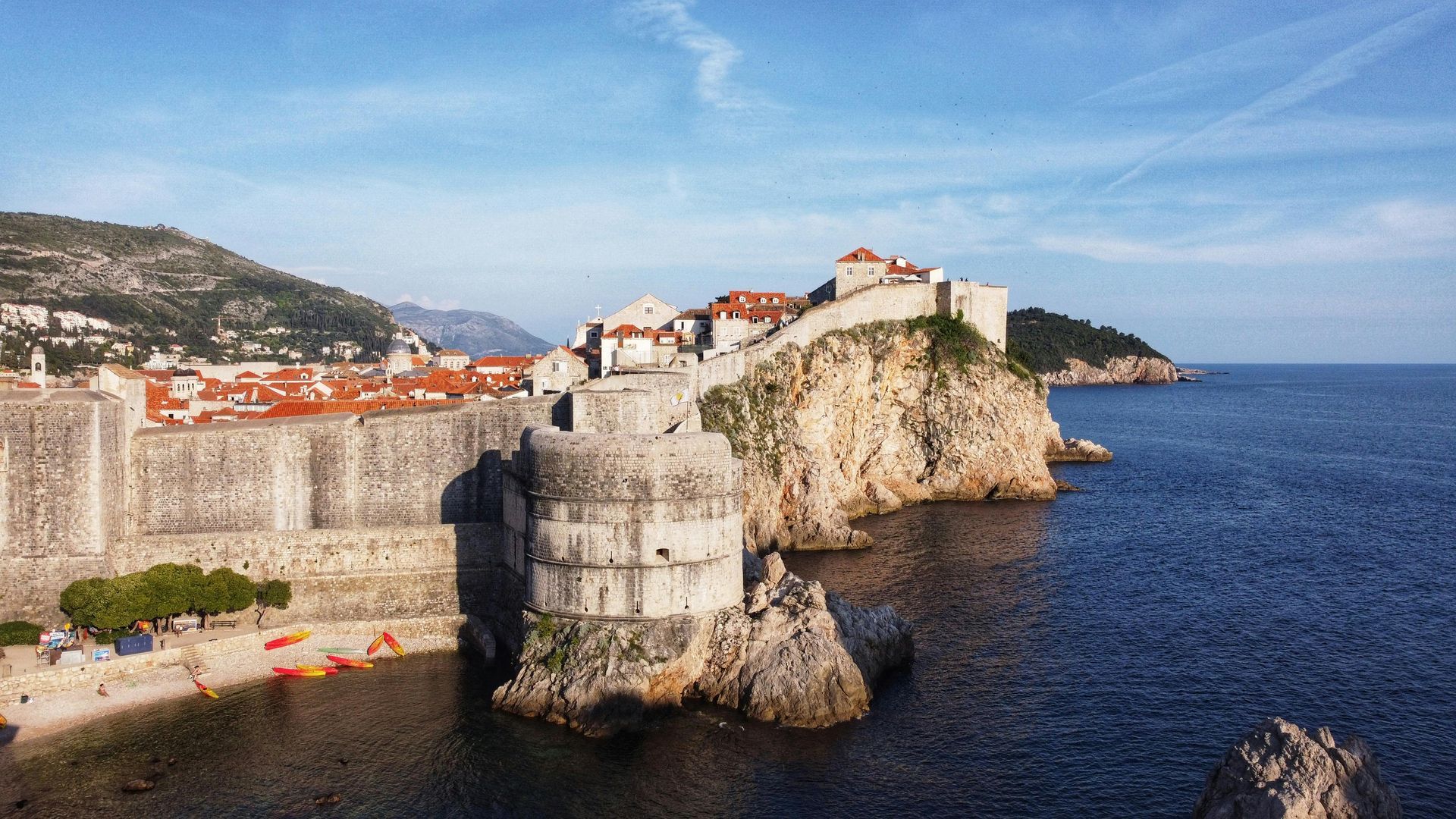
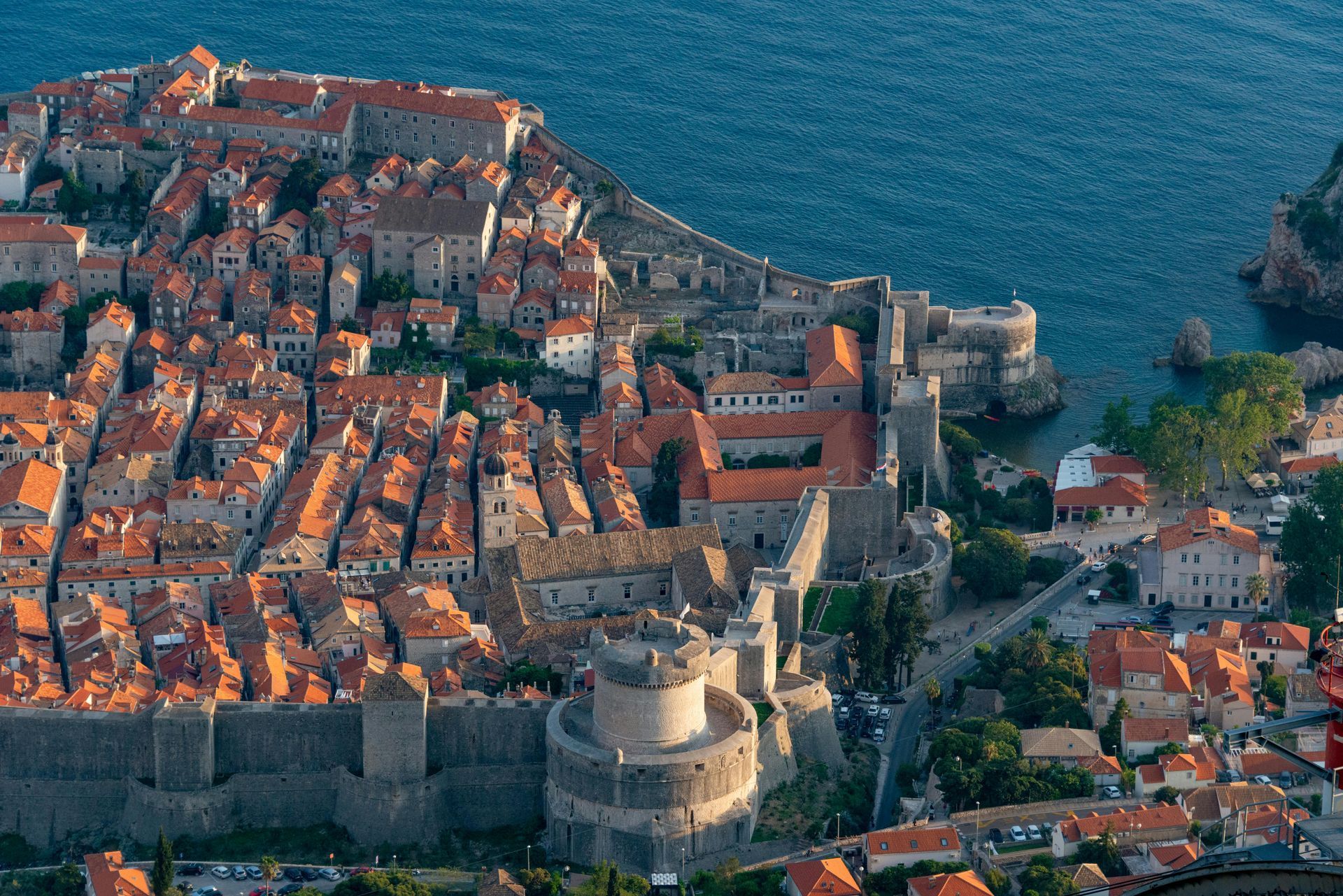
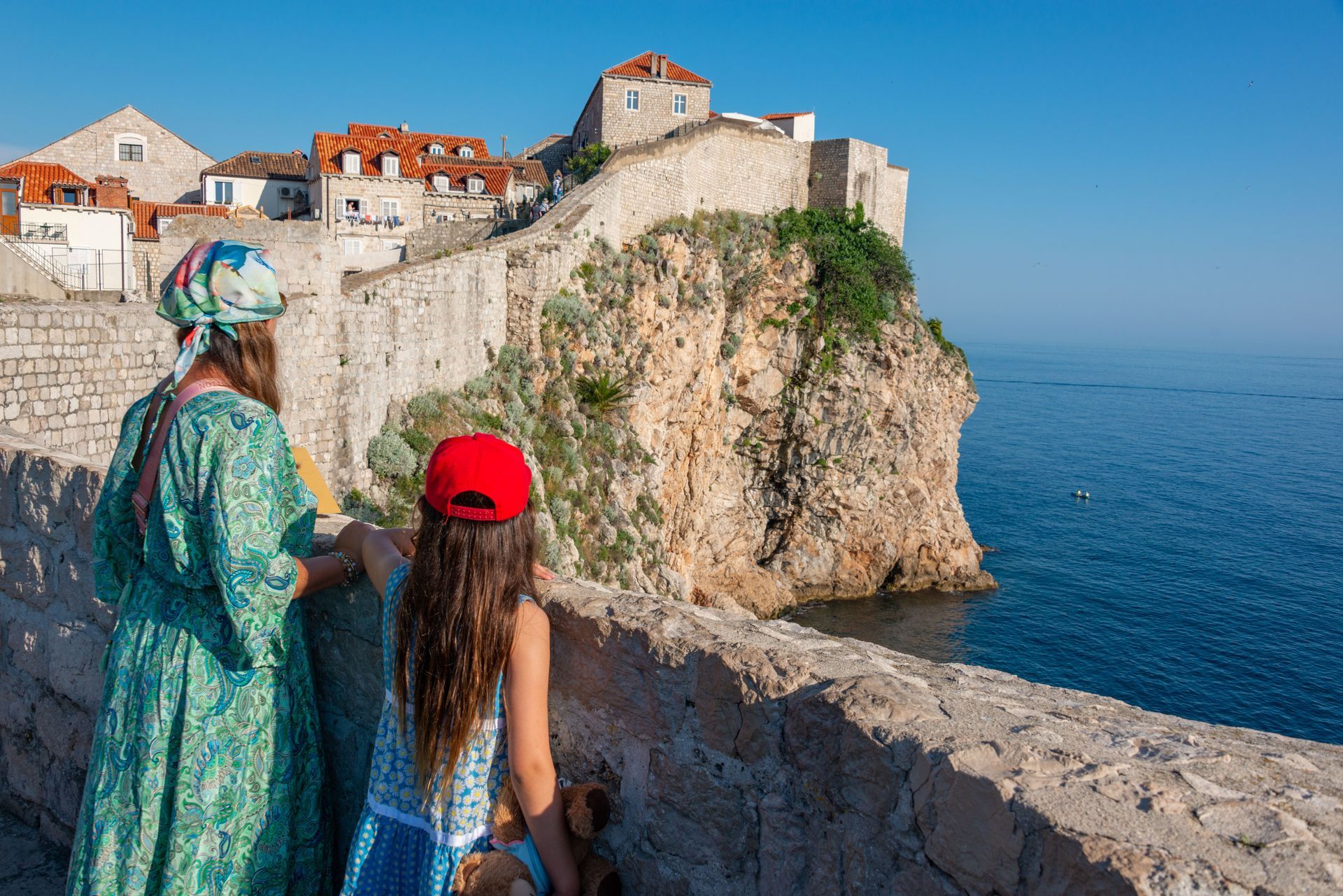
But from the Adriatic, the contrast between the limestone fortifications, rocky coastline, and deep blue sea becomes part of the view.
It's one of the reasons we love showing visitors Dubrovnik from the water.
The city's skyline looks impressive from almost every direction, but the sea adds a completely different perspective.
When Does the Adriatic Look Its Bluest?
There's no single month or hour when the Adriatic is guaranteed to look its best. However, sunlight, water conditions, and viewing angle can make a noticeable difference.
On a clear day with calm water, bright sunlight can make shallow areas appear especially vivid.
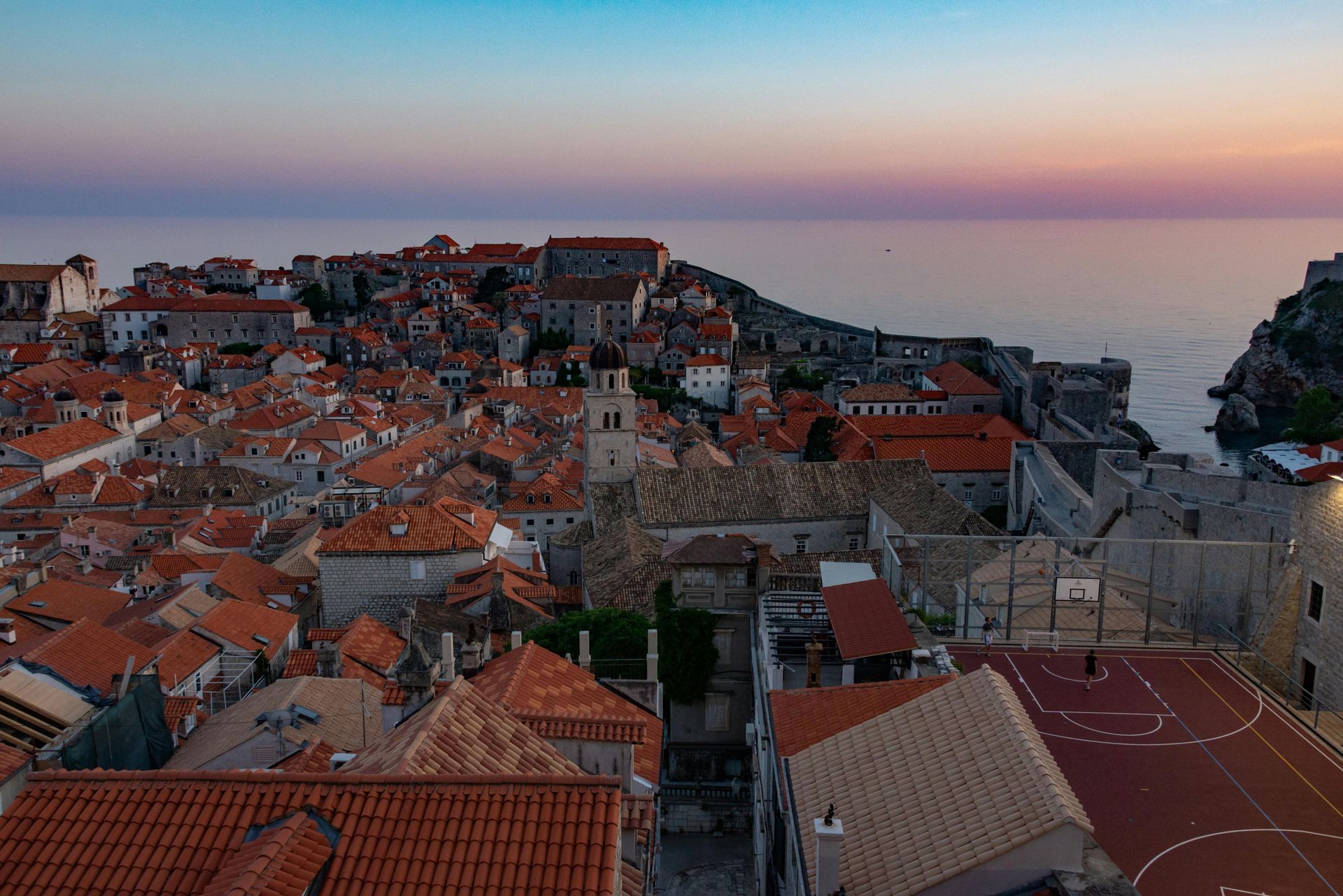
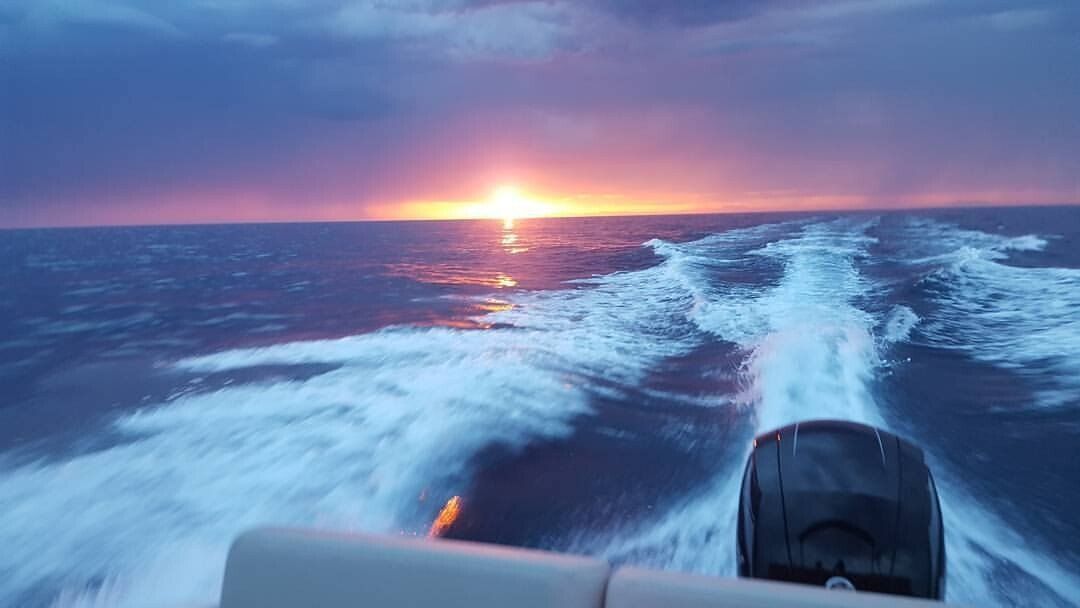
When the sun is lower, such as early in the morning or toward sunset, the light changes. Reflections become more noticeable, shadows grow longer, and the same stretch of water can take on warmer or darker tones.
For photographs, this creates two very different opportunities. If you want to capture vibrant turquoise shallows, brighter sunlight and calm conditions can help. If you're looking for a softer atmosphere, with Dubrovnik's historic skyline reflected against the Adriatic, the hours closer to sunset can be particularly beautiful.
Neither experience is necessarily better. They're simply different ways of seeing the same sea.
Local tip: If you're taking photographs from a boat, try looking at the water from several angles. Reflections on the surface can make a big difference, even when the water underneath hasn't changed at all.